

Novel Coronavirus (COVID-19) Information for the UCLA Campus Community
Due to the impact of novel coronavirus (COVID-19), effective Wednesday, March 11, 2020, UCLA classes will transition from in-person instruction to on-line platforms.
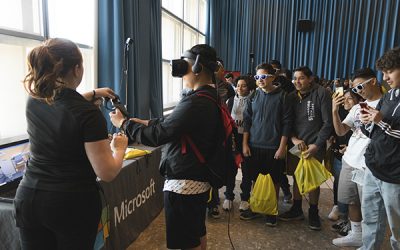
UCLA Engineering Students to Host Hundreds of High Schoolers in Tech Exploration
This Friday, more than 400 high school students from Southern California will get to code, build hardware and experiment with virtual reality at an outreach event organized by UCLA engineering students.
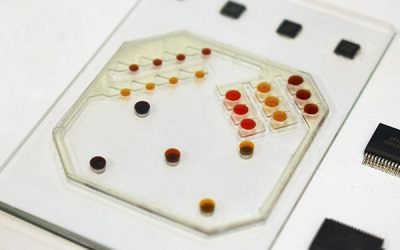
UCLA engineers develop miniaturized “warehouse robots” for biotechnology applications
UCLA engineers have developed minuscule warehouse logistics robots that could help expedite and automate medical diagnostic technologies and other applications that move and manipulate tiny drops of fluid.

Google Recognizes UCLA Samueli Faculty Research
Four UCLA Samueli faculty members have received 2019-2020 Google Faculty Research Awards for their technical research in computer science and engineering.
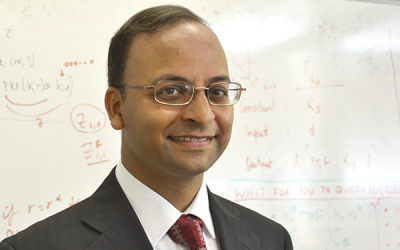
UCLA Computer Science Professor Receives $1.5 Million Grant from NTT Research
UCLA computer science professor, Amit Sahai, has received $1.5 million in support from NTT Research, a division of NTT to support his research on the leading edge of cryptography, the field of secure communications.
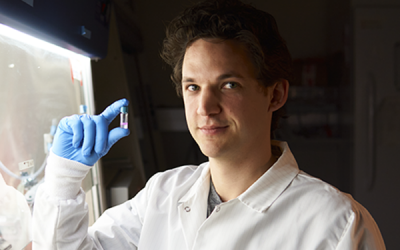
UCLA Samueli Student is Second in History to Win Coveted Innovation Award
Bioengineering doctoral student Joseph de Rutte overcame the odds to win this year’s $10,000 Society for Laboratory Automation and Screening Innovation Award, becoming only the second student to ever win the prize in its 16-year history.

UCLA Samueli Alumni Elected to National Academy of Engineering
Two graduates of the UCLA Sameuli School of Engineering – Alison K. Brown Ph.D. ’85 and Reza Rofougaran ’86, M.S. ’88, Ph.D. ’88 – were elected to the National Academy of Engineering earlier this month.
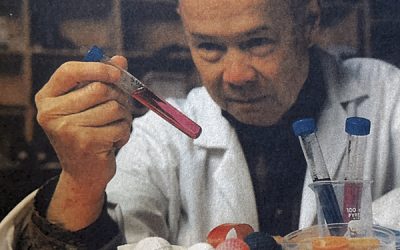
In Memoriam: John D. Mackenzie, 94, Leader in Glass and Ceramics Processing
John D. Mackenzie, professor emeritus of materials science and engineering at the UCLA Samueli School of Engineering who made pioneering contributions to glass and ceramics processing, died Feb. 19, after a brief illness. He was 94.
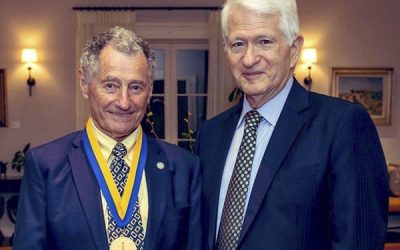
Internet Architect Dr. Leonard Kleinrock Receives UCLA Medal
Leonard Kleinrock, distinguished professor of computer science and one of the world’s foremost internet pioneers, was awarded the UCLA Medal, , the campus’s highest honor, for his remarkable contributions in providing the intellectual foundation for the modern technical age.