Computer Science Theory

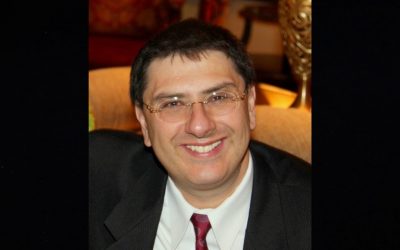
Alexander Sherstov

Alexander Sherstov

I am a professor at UCLA, in the Department of Computer Science. My area of specialization is theoretical computer science. I am particularly interested in computational complexity theory, computational learning theory, and quantum computing. Prior to joining UCLA, I was a postdoctoral researcher at Microsoft Research New England (2009–2011). I completed my Ph.D. in computer science at the University of Texas at Austin in 2009, under the direction of Adam Klivans.
Amit Sahai

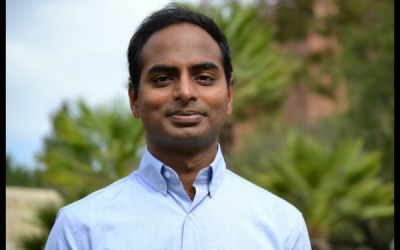
Amit Sahai

Amit Sahai is a professor of computer science at the UCLA Samueli School of Engineering and the director of the Center for Encrypted Functionalities, a National Science Foundation Frontiers Center. He is a Simons Investigator (2021), Fellow of the Royal Society of Arts (2021), Fellow of the ACM (2018), Fellow of the IACR (2019), and the Symantec Endowed Chair in Computer Science.

Sahai’s research interests are in the foundations of computer security and cryptography, in particular, hiding secrets in software — secure program obfuscation, cryptographic proofs and secure multiparty computation. He is the co-inventor of attribute-based encryption, functional encryption and indistinguishability obfuscation.

Prior to joining UCLA in 2004, Sahai was on the faculty at Princeton University. He received his Ph.D. in computer science from MIT in 2000, and has published more than 150 original technical research papers at venues such as the ACM Symposium on Theory of Computing (STOC), CRYPTO, and the Journal of the ACM. He serves as an editor of J. Cryptology (Springer-Nature) and is an advisor to the nonprofit Prison Mathematics Project.

He is a frequent speaker at various institutions, including MIT, Stanford, Berkeley and the 2004 Distinguished Cryptographer Lecture Series at NTT Labs in Japan.

Professor Sahai is the recipient of numerous honors, including an Alfred P. Sloan Foundation Research Fellow in 2002, an Okawa Research Grant Award in 2007, a Xerox Foundation Faculty Award in 2010, a Google Faculty Research Award in 2010, a 2012 Pazy Memorial Award, a 2016 ACM CCS Test of Time Award, a 2019 AWS Machine Learning Research Award, a 2020 IACR Test of Time Award (Eurocrypt) and a STOC 2021 Best Paper Award.

For his teaching, Sahai was given the 2016 Lockheed Martin Excellence in Teaching Award from UCLA Samueli. His research has been covered by many news outlets including Forbes, BBC, Quanta Magazine, Wired, and IEEE Spectrum.

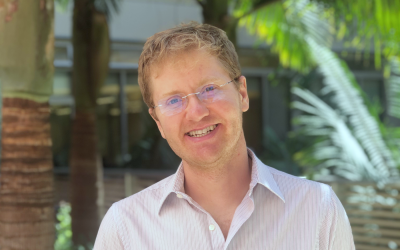
Rafail Ostrovsky

Rafail Ostrovsky

Rafail Ostrovsky holds the Norman E. Friedman Chair in Knowledge Sciences at UCLA Samueli School of Engineering. He is a distinguished professor of computer science and mathematics at UCLA. He is a Fellow of multiple organizations, including the American Association for the Advancement of Science (AAAS), the Association for Computing Machinery (ACM), the Institute of Electrical and Electronics Engineers (IEEE), and the International Association for Cryptologic Research (IACR); and a foreign member of Academia Europaea, with over 350 refereed publications and 15 issued USPTO patents. He served as chair of the IEEE Technical Committee on Mathematical Foundations of Computing from 2015 to 2018 and served as a Chair of the IEEE Annual Symposium on Foundations of Computer Science (FOCS) 2011 Program Committee (PC). He also served on over 40 other international conference PCs and is currently serving on the editorial boards of the Journal of ACM, Algorithmica Journal, and Journal of Cryptology. He is the recipient of multiple awards and honors, including the 1993 Henry Taub Prize; the 2017 IEEE Computer Society Edward J. McCluskey Technical Achievement Award; the 2018 RSA Award for Excellence in Mathematics (also known as RSA Prize); and the 2022 W. Wallace McDowell Award, the highest award given by the IEEE Computer Society.

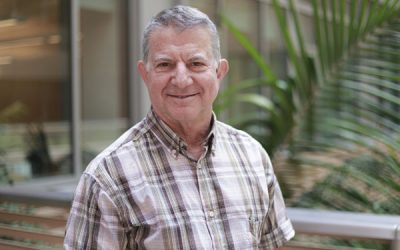
Eliezer Gafni

Eliezer Gafni

Dr. Gafni was born in Tel-Aviv, Israel. He received his Bs.C from the Technion, Israel in 1972, and Ms and Ph.D. in Electrical Engineering in 1979 and 1982, from the University of Illinois at Urbana Champaign, and M.I.T, respectively. In 1982 he joined the UCLA computer science faculty. Dr. Gafni was the recipient of a 1983 IBM Faculty Development Award, and a 1984 NSF Presidential Young Investigator Award. His research interests include distributed algorithms, mathematical programming with application to distributed routing and control of data networks, and computer science theory.