Bioengineering
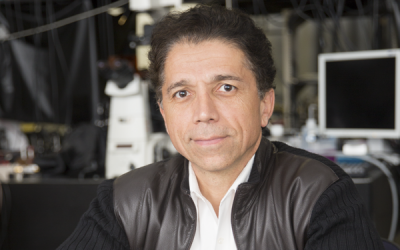
Bahram Jalali
Bahram Jalali is a professor emeritus of electrical and computer engineering at UCLA, with joint appointments in bioengineering and the California NanoSystems Institute (CNSI).
Jalali received his Ph.D. in applied physics from Columbia University in 1989 and was with the Physics Research Division of Bell Laboratories in Murray Hill, New Jersey from 1988 to 1992 before joining UCLA. He is a member of the National Academy of Inventors (NAI), Fellow of IEEE, OSA, APS, AIMBE, and SPIE. He is the recipient of the R.W. Wood Prize from the Optical Society of America for creating the first silicon laser, the Aaron Kressel Award from IEEE, and the Achievement Medal from IET (U.K), and the Pioneer in Technology Award from the Society of Brain Mapping & Therapeutics. He is the inventor of the time stretch and the radiofrequency imaging and sensing modalities that have been commercialized for applications to blood screening.
In 2022, Jalali was elected as a member of the National Academy of Engineering. He is also a member of the UCLA Parker Institute for Cancer Immunotherapy (PICI). He has been elected into the Scientific American Top 50 and MIT Technology Review Magazine Top 10 and has served on the board of directors of the California Science Center, the Brentwood School, and was a member of the Institute of Defense Analysis’ Microsystem Exploratory Council. He currently serves on the Board of Visitors of Columbia University School of Engineering.
Tzung Hsiai
Chih-Ming Ho

Linda Demer
Mark Cohen
Pei-Yu “Eric” Chiou
Denise Aberle
Dr. Aberle is a professor of Radiology in the School of Medicine and professor of Bioengineering in the Henry Samueli School of Engineering and Applied Sciences. She is board-certified in Internal Medicine and Diagnostic Radiology. Dr. Aberle earned her MD degree in 1979 at the University of Kansas in Kansas City, KS and completed a residency in Internal Medicine at Boston University Medical School in 1982. She completed a residency in Diagnostic Radiology at UCLA in 1982, and subspecialty training in thoracic imaging at the University of California, San Francisco. She has been on faculty in Radiological Sciences since 1987, and was the Section Chief of Thoracic Imaging from 1988 to 2005. Dr. Aberle is the Vice Chair of Research in Radiological Sciences and a faculty member in the interdisciplinary Biomedical Physics and the Medical Imaging Informatics training programs, both sponsored by the National Institutes of Health. Dr. Aberle was the Principal Investigator of the ACRIN-NLST (American College of Radiology Imaging Network component of the National Lung Screening Trial). The NLST was an NCI-sponsored randomized trial that compared lung cancer mortality between low dose helical CT (LDCT)versus chest radiography for lung cancer screening. The trial observed a 20% lung cancer mortality reduction with LDCT, which has led to the endorsement of LDCT screening for lung cancer by multiple medical societies. Dr. Aberle’s research centers on lung cancer screening | early diagnosis | prevention and screening implementation. Other interests include: oncologic imaging for response assessment; quantitative image analysis, and oncology informatics.

Benjamin Wu
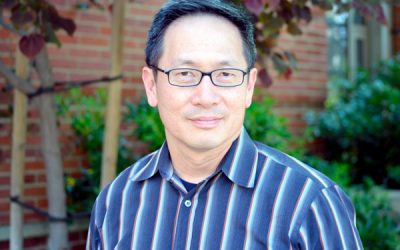
Gerard Wong
Professor Wong received his BS degree in Physics from Caltech and his PhD in Physics from UC Berkeley.
He subsequently pursued postdoctoral research on soft matter physics at the FOM Institute for Atomic and Molecular Physics in Amsterdam, and on biophysics and bioengineering at UC Santa Barbara. Wong represented the U.S. in the NSF-MEXT US-Japan Young Scientist ymposium on Nanobiotechnology (2005), the Taipei Academia Sinica International Workshop on Soft Matter and Biophysics (2007), and the NSF-DST US-India Nanoscience & Engineering Workshop (2008). He currently serves on the Editorial Board of Physical Review E.
Stephanie Seidlits