
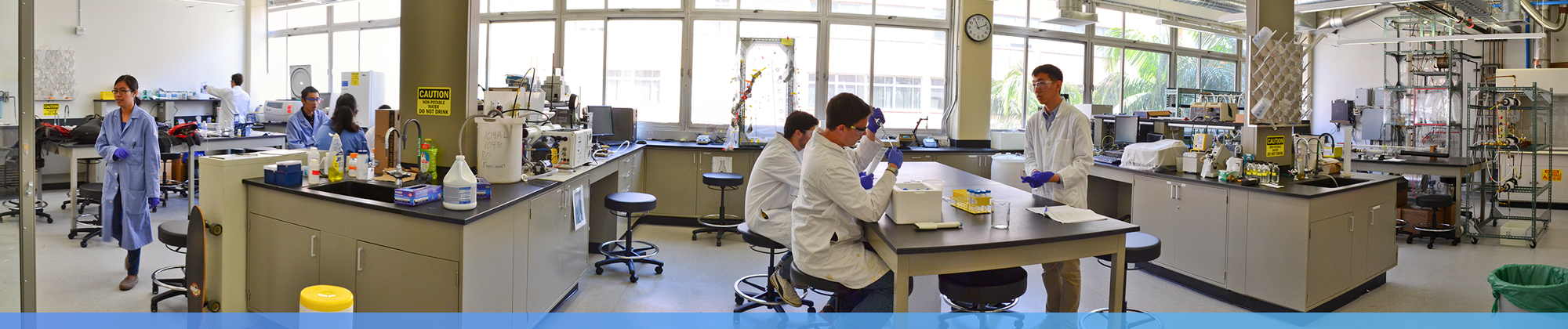
Expanding the engineering profession to all.
We doubt the critics, reject the status quo and see opportunity in dissatisfaction. Our campus, faculty and students are driven by optimism. It is not naïve; it is essential. And it has fueled every accomplishment, allowing us to redefine what’s possible, time after time.
This can-do perspective has brought us 17 Nobel Prizes, 39 MacArthur Fellows, more NCAA titles than any public university and more Olympic medals than most nations. Our faculty and alumni helped create the Internet and pioneered reverse osmosis. And more than 140 companies have been created based on technology developed at UCLA.
What inspires MacArthur Fellows and Rhodes Scholars? What gave Jackie Robinson the courage to become the first African American in Major League Baseball? What was the catalyst that spurred Vint Cerf and Leonard Kleinrock’s dream of the Internet?
The answer is optimism. And it is in our DNA. It is what enables us to push forward and redefine what’s possible. It pervades our focus on education, research and service and, in turn, opens limitless opportunities to every student.
And through its eye-opening lens, we see beyond the classroom, allowing us to engage with the world right now.
As UCLA moves onward, we leverage our history to define our future. Every achievement and breakthrough we have made justifies our optimism, calling us to build upon our past. And as we near the end of a century of excellence, we steadfastly pursue future endeavors with the same optimism that brought us here.
This is UCLA.
These are the grounds of optimism.
www.ucla.edu
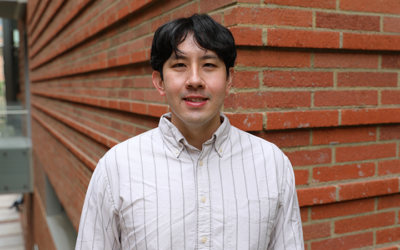
UCLA Bioengineer Jason Zhang Receives More Than $1 Million for Brain Cancer and Heart Disease Research
Jason Zhang, an assistant professor of bioengineering at the UCLA Samueli School of Engineering, has received two grants totaling $1.03 million
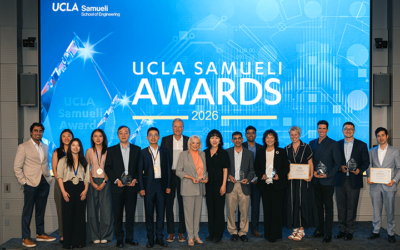
UCLA Samueli Honors 2026 Award Recipients at Annual Showcase
The paths to success in engineering rarely follow a straight line. For many accomplished Bruin engineers, an education at the UCLA Samueli School of Engineering provided the foundation for careers shaped by unexpected opportunities rather than careful planning.
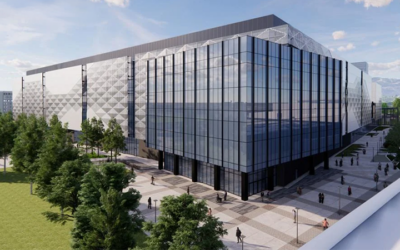
UCLA Samueli to Join Applied Materials’ EPIC Center to Accelerate Chip Innovation
The UCLA Samueli School of Engineering and Applied Materials Inc. announced today an agreement for the school to join as a research collaborator
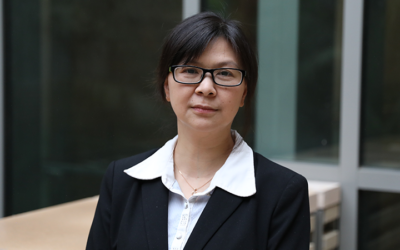
UCLA Engineering Professor Yu Huang Receives International Breakthrough Honor for Hydrogel Fuel Cell Innovation
Yu Huang, a professor of materials science and engineering and holder of the Traugott and Dorothea Frederking Endowed Chair at the UCLA Samueli School of Engineering
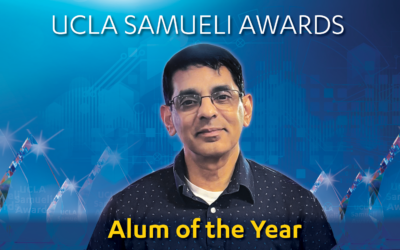
UCLA Samueli Announces 2026 Alum of the Year
Each year, the UCLA Samueli School of Engineering honors alumni, faculty, students and other engineering leaders for outstanding achievements in their fields.
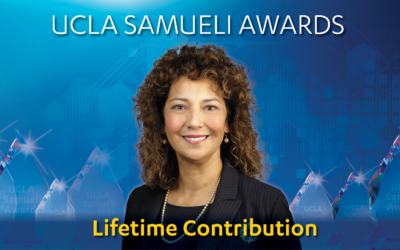
UCLA Samueli Announces 2026 Lifetime Contribution Award
Every year, the UCLA Samueli School of Engineering selects and recognizes outstanding achievements by a number of its alumni, faculty members and students who have excelled in various fields.