
UCLA Engineering Professor Yu Huang Receives International Breakthrough Honor for Hydrogel Fuel Cell Innovation
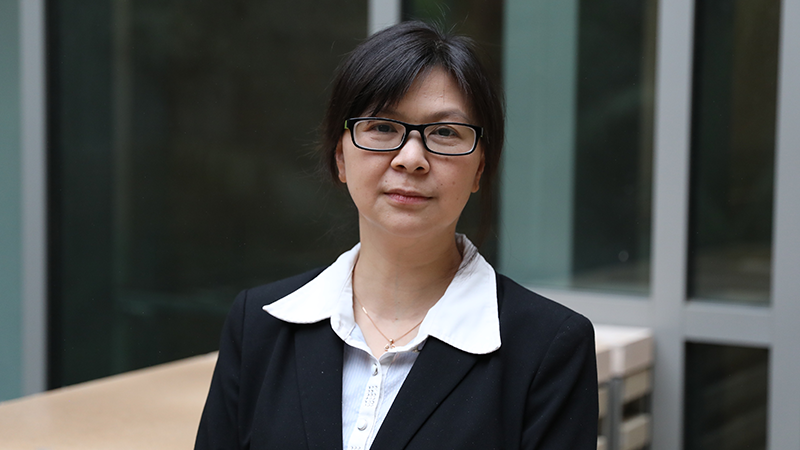
Yu Huang, a professor of materials science and engineering and holder of the Traugott and Dorothea Frederking Endowed Chair at the UCLA Samueli School of Engineering, has been selected by the Falling Walls Foundation for its 2026 Science Breakthrough of the Year in Engineering and Technology for research aimed at making hydrogen fuel cells more durable and cost-effective.
Established in 2009, the Falling Walls Foundation is a Germany-based nonprofit organization created in the spirit of the fall of the Berlin Wall to promote scientific collaboration and innovation. The foundation selected six projects for its 2026 Breakthrough honors from more than 2,000 nominations submitted by 474 academic institutions worldwide. Each of the Falling Walls Science Breakthroughs represents innovative work with the potential to advance society.
Huang, who joined UCLA in 2006, is being recognized for research designed to extend the lifespan of hydrogen fuel cells while reducing their reliance on platinum, an expensive precious-metal catalyst used to drive the chemical reactions that generate electricity. Her research group exploits precise integration of heterogenous material at nanoscale to alleviate degradation of nanocatalysts. This approach helps mitigate traditional tradeoffs between performance, durability and the use of precious metals in fuel cell catalysts, enabling greatly reduced usage of precious metal while maintaining desired performance even under heavy duty operating conditions.
“By dramatically extending catalyst lifetime while reducing platinum requirements, our work provides a scalable pathway toward cost-effective, durable fuel cells for transportation, heavy-duty vehicles, and other industrial applications,” Huang said in a finalist interview with the foundation. “More broadly, it establishes a general design principle for next-generation electrocatalysts, accelerating the deployment of clean hydrogen technologies and advancing global decarbonization efforts.”
At UCLA, Huang has a joint faculty appointment in the Department of Chemistry and Biochemistry and is a member of the California NanoSystems Institute.
Among her numerous national and international awards and recognitions, Huang has received the Global Energy Prize, the Eni Energy Transition Award, the Royal Society of Chemistry’s Faraday Horizon Prize, the International Society of Electrochemistry-Elsevier Prize for Experimental Electrochemistry and the International Precious Metals Institute Carol Tyler Award. She is also a fellow of the Royal Society of Chemistry and the Materials Research Society.
Huang has also been named a Clarivate Highly Cited Researcher every year since 2018. The annual list recognizes scholars who have authored multiple studies that rank in the top 1% in the number of scholarly citations worldwide.
Every year, the Falling Walls Science Summit brings together some of the world’s leading researchers and policy makers to discuss breakthroughs in science, business, politics and media. Huang will officially be recognized at this year’s summit in Berlin on Nov. 9, coinciding with the anniversary of the fall of the Berlin Wall in 1989. The summit is also part of the citywide Berlin Science Week.