
UCLA Bioengineer Jason Zhang Receives More Than $1 Million for Brain Cancer and Heart Disease Research
UCLA Samueli
>
UCLA Samueli Newsroom
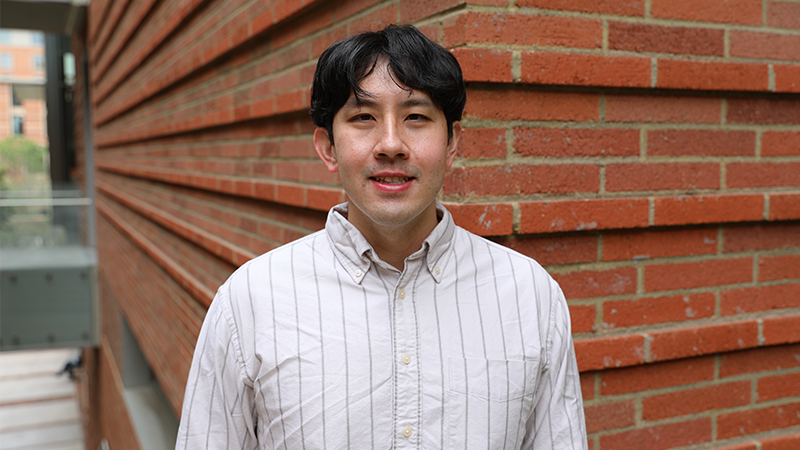
Jason Zhang, an assistant professor of bioengineering at the UCLA Samueli School of Engineering, has received two grants totaling $1.03 million to advance research into the cellular mechanisms underlying brain cancer and heart disease. The awards include $800,000 from the V Foundation for Cancer Research and $225,000 from the Edward Mallinckrodt, Jr. Foundation.
The three-year grant from the Edward Mallinckrodt, Jr. Foundation will support Zhang’s research into heart disease using artificial intelligence-designed protein tools to decode molecular “barcodes” on G-protein coupled receptors, the target of one-third of FDA-approved drugs. The research aims to better understand how disruption of these receptors underlies the disease.
Zhang, who joined UCLA Samueli in 2025, is the first UCLA Samueli faculty member to receive the award, which supports early-career researchers whose work in basic and translational biomedical science has the potential to advance the understanding of health and human disease.
At UCLA, Zhang’s lab uses generative AI to design proteins and molecular tools that help researchers study how cells communicate and how disruptions in cellular signaling contribute to disease.
The V Foundation grant will support Zhang’s research over four years into how glioblastoma cells become resistant to targeted treatments. Glioblastoma is an aggressive brain cancer that is particularly difficult to treat because tumors contain diverse populations of cancer cells. While targeted drugs can block signals that drive tumor growth, some cancer cells activate alternative pathways that make them resistant to treatment.
Zhang and his research group will use AI to design protein-based sensors that act like molecular “flashlights,” allowing them to watch growth signals inside individual living cancer cells during treatment. Working with UCLA scientists Aparna Bhaduri, an assistant professor of medicine and biological chemistry, and David Nathanson, a professor of molecular and medical pharmacology, Zhang’s team will test the sensors in patient-derived tumor models that reproduce important features of human glioblastoma. By observing how individual cancer cells respond to treatment, researchers hope to identify small populations of resistant cells that might be overlooked when tumors are studied as a whole. The findings could inform combinations of therapies designed to block the alternative signals that help cancer cells survive.
“Understanding how these cells escape treatment is critical for developing better therapies,” said Zhang, who is a member of the Jonsson Comprehensive Cancer Center and the California NanoSystems Institute at UCLA. “This support from the V Foundation will allow us to look at glioblastoma in a fundamentally different way, not as one uniform tumor, but as a collection of individual cancer cells that can respond to treatment in very different ways.”
Read the full story about Zhang’s V Foundation grant on the UCLA Health website.