

Artificial Intelligence
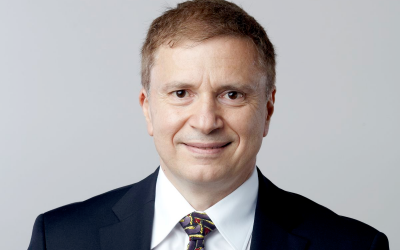
Demetri Terzopoulos
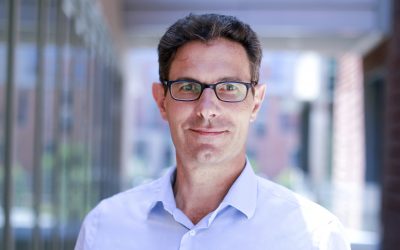
Stefano Soatto
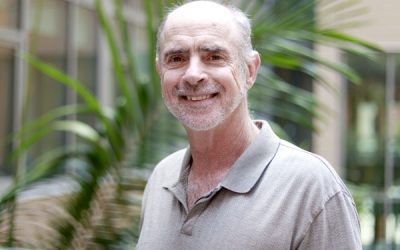
Richard Korf
Richard Korf is a Professor Emeritus of computer science at the University of California, Los Angeles. He received his B.S. from M.I.T. in 1977, and his M.S. and Ph.D. from Carnegie-Mellon University in 1980 and 1983, respectively, all in computer science. From 1983 to 1985, he served as Herbert M. Singer Assistant Professor of Computer Science at Columbia University. His research is in the areas of problem-solving, heuristic search, and planning in artificial intelligence. He is the author of “Learning to Solve Problems by Searching for Macro-Operators” (Pitman, 1985). He served on the editorial boards of Artificial Intelligence, and the Journal of Applied Intelligence. Dr. Korf is the recipient of a 1985 IBM Faculty Development Award, a 1986 NSF Presidential Young Investigator Award, the first UCLA Computer Science Department Distinguished Teaching Award in 1989, the first UCLA School of Engineering Student’s Choice Award for Excellence in Teaching in 1996, the Lockheed Martin Excellence in Teaching Award in 2005, the Artificial Intelligence Classic Paper Award in 2016, and a career award from the Symposium on Combinatorial Search in 2018. He is a Fellow of the American Association for Artificial Intelligence.
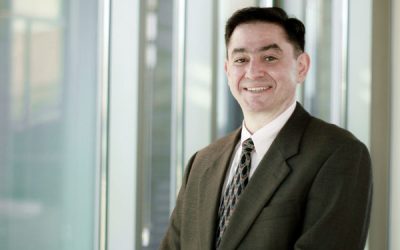
Adnan Darwiche
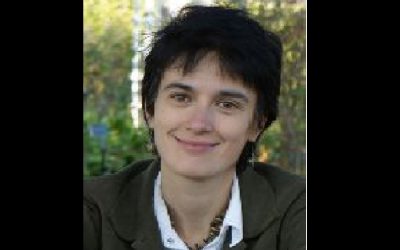
Mihaela van der Schaar
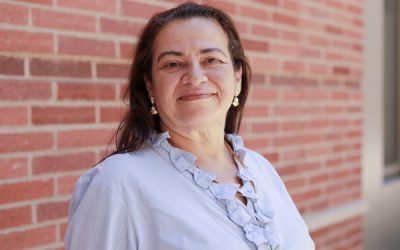
Abeer Alwan
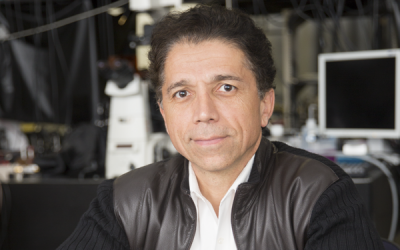
Bahram Jalali
Bahram Jalali is a professor emeritus of electrical and computer engineering at UCLA, with joint appointments in bioengineering and the California NanoSystems Institute (CNSI).
Jalali received his Ph.D. in applied physics from Columbia University in 1989 and was with the Physics Research Division of Bell Laboratories in Murray Hill, New Jersey from 1988 to 1992 before joining UCLA. He is a member of the National Academy of Inventors (NAI), Fellow of IEEE, OSA, APS, AIMBE, and SPIE. He is the recipient of the R.W. Wood Prize from the Optical Society of America for creating the first silicon laser, the Aaron Kressel Award from IEEE, and the Achievement Medal from IET (U.K), and the Pioneer in Technology Award from the Society of Brain Mapping & Therapeutics. He is the inventor of the time stretch and the radiofrequency imaging and sensing modalities that have been commercialized for applications to blood screening.
In 2022, Jalali was elected as a member of the National Academy of Engineering. He is also a member of the UCLA Parker Institute for Cancer Immunotherapy (PICI). He has been elected into the Scientific American Top 50 and MIT Technology Review Magazine Top 10 and has served on the board of directors of the California Science Center, the Brentwood School, and was a member of the Institute of Defense Analysis’ Microsystem Exploratory Council. He currently serves on the Board of Visitors of Columbia University School of Engineering.