

Core Faculty

Leo Zhou
Prof. Leo Zhou’s research is in the theory of quantum computation and quantum information science, with interests in topics such as mathematical optimization, computational complexity, high-dimensional statistics, and many-body physics. His research group aims to uncover useful applications of quantum computers while deepening our understanding of physical systems through the lens of quantum information. His contributions include analysis of quantum algorithms and architecture, as well as establishing foundational results in quantum complexity theory. Moreover, he collaborates closely with experimentalists to develop and implement practical quantum applications on current and near-term quantum hardware.
Liz Izhikevich
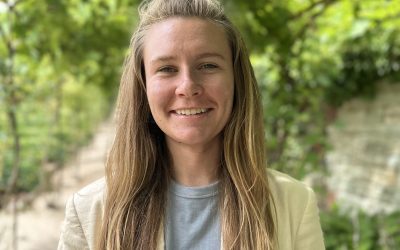
Liz Izhikevich is an Assistant Professor in Electrical and Computer Engineering at UCLA. Her research focuses on improving Internet performance and security, both on earth and in space. Her work has been recognized nationally, including Forbes’ 30 Under 30 in Science (2025) and the Internet Measurement Conference Community Contribution Award (2022). Government agencies and industry partners rely on her tools to identify and mitigate online vulnerabilities, and her collaborations have improved video delivery for over a million satellite broadband users. She received her Ph.D. in Computer Science from Stanford University in 2024 and has held research positions at Netflix and Censys.

Xiaofan Cui

Ian Roberts
My group conducts theoretical and experimental research on wireless communication and sensing. We use mathematical tools, machine learning, and real-world hardware to analyze, model, optimize, and prototype wireless systems and solutions. Our research aims to drive the design, development, and deployment of next-generation wireless networks, such as 5G and future 6G cellular systems.

Yuan Tian
Yuan Tian is an Associate Professor of Electrical and Computer Engineering, Computer Science and of the Institute of Law, Technology, and Public Policy at University of California, Los Angeles. Before joining UCLA, She was an Assistant Professor of Computer Science at University of Virginia, and she obtained her Ph.D from Carnegie Mellon University in 2017, and interned at Microsoft Research, Facebook, and Samsung Research. Her research interests involve security and privacy and its interactions with computer systems, machine learning, and human-computer interaction. Her current research focuses on developing new technologies for protecting user privacy, particularly in the areas of the Internet of Things and machine learning. Her work has generated real-world impact as countermeasures and design changes have been integrated into popular platforms, and also impacted the security recommendations of standard organizations. She is a recipient of Okawa Foundation Award 2022, Google Research Scholar Award 2021, Facebook Faculty Award 2021, NSF CAREER Award 2020, NSF CRII award 2019, Amazon AI Faculty Fellowship 2019. Her research has appeared in top-tier venues in Security, and System. Her projects have been covered by media outlets such as IEEE Spectrum, Forbes, Fortune, Wired, and Telegraph.
Hooman Darabi
Sergio Carbajo

Yang Zhang
Prof. Zhang’s research focuses on enhancing ambient computing devices with powerful perceptual and interaction capabilities, fostering practical, inclusive, and sustainable intelligence that assist users in the physical environment. Specifically, he invents sensing technologies and energy-harvesting systems deployed in user environments, contributing to the advancement of the Internet-of-Things, personal informatics, and assistive and autonomous technologies.

Nader Sehatbakhsh
Lin Yang
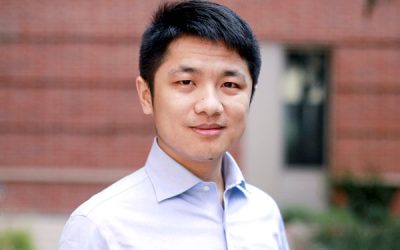
Dr. Lin Yang is an assistant professor in the Electrical and Computer Engineering Department at the University of California, Los Angeles. His research focuses on developing and applying fast algorithms for machine learning and data science. His current research focus is on reinforcement learning theory and applications, learning for control, non-convex optimization, and streaming algorithms. Previously, he was a postdoc at Princeton University. He obtained two Ph.D. degrees (in Computer Science and in Physics & Astronomy) from Johns Hopkins University. He was a recipient of the Simons’ Research Fellowship and Dean Robert H. Roy Fellowship.
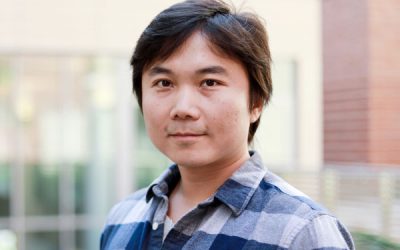
Xiang Anthony Chen
Anthony’s research mission is to expand the interaction bandwidth between human and AI, specifically, enabling domain-specific users to comprehend and control AI with an eventual vision of human-AI collaboration. He received his Ph.D. in the School of Computer Science at Carnegie Mellon University in 2017 and was a recipient of the Hellman Fellowship, NSF CISE CRII Award and the Adobe Ph.D. Fellowship. Anthony’s work has won two best paper awards and two honorable mentioned in top-tier HCI conferences.