
Transforming Southern California and the World
The UCLA Henry Samueli School of Engineering and Applied Science includes more than 6,500 undergraduate and graduate students and 190 full-time faculty members. Established in 1945, UCLA Samueli is known as the birthplace of the internet, and where countless other fields took some of their first steps — from artificial intelligence to reverse osmosis, from mobile communications to human prosthetics.
The school academic departments include Bioengineering, Chemical and Biomolecular Engineering, Civil and Environmental Engineering, Computer Science, Electrical and Computer Engineering, Materials Science and Engineering, and Mechanical and Aerospace Engineering, as well as the recently added Department of Computational Medicine, which is affiliated with both the David Geffen School of Medicine and Samueli. In addition, UCLA Samueli offers the Master of Science in Engineering Online program and a Master of Engineering professional degree program.
In 2000, the engineering school was re-named in honor of alumnus Henry Samueli, following a $30 million gift that supported capital improvements as well as fellowships for graduate students and early career faculty. In 2019, Samueli and his wife Susan gave another gift of $100 million to support the school’s expansion well into the next decade.
UCLA Samueli is in the midst of an extraordinary period of growth, with expansion in the number of research labs, faculty and students. New faculty will bring expertise in emerging research areas, such as engineering in medicine, quantum technologies, and sustainable and resilient urban systems.
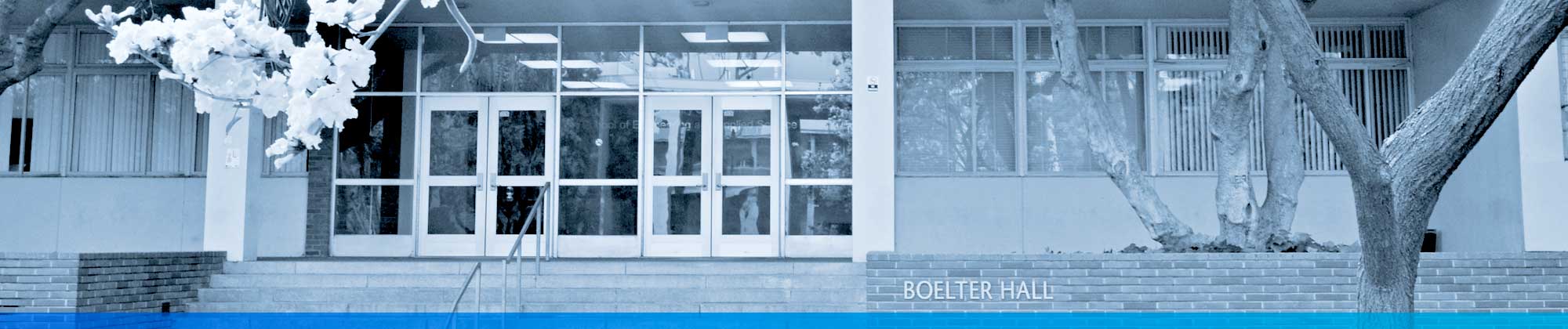
The school’s facilities include four major buildings — Boelter Hall, Engineering-IV, Engineering-V and Engineering-VI. Recent renovations have added the Student Creativity Center — home to many of its student organizations, and the Innovation Laboratory — a makerspace for hands-on learning and creativity.
The school is ranked No.1 as of 2023 for its online master’s program by U.S. News & World Report.
To see what makes the UCLA Samueli School of Engineering so special, book a tour with one of our Engineering Ambassadors on campus, and download our Viewbook.
News
UCLA Engineering Researchers use Electricity to Generate Alternative Fuel
By UCLA Samueli Newsroom [social_share_button]by Wileen Wong Kromhout Imagine being able to use electricity to power your car — even if it's not an electric vehicle. Researchers at the UCLA Henry Samueli School of Engineering and Applied Science have for the first...
Judea Pearl Wins ACM Turing Award for Contributions that Transformed Artificial Intelligence
By UCLA Samueli Newsroom [social_share_button]Pearl Developed Novel Framework for Reasoning under Uncertainty that Changed How Scientists Approach Real World Problems NEW YORK, March 15, 2012 – ACM, the Association for Computing Machinery www.acm.org today named...
Professor receives NSF CAREER Award for key research on massive data storage and processing
By UCLA Samueli Newsroom [social_share_button]Lara Dolecek, a UCLA assistant professor of electrical engineering, has received a Faculty Early Career Development (CAREER) award from the National Science Foundation. The NSF CAREER award is the organization’s most...
Electrical Engineering Professor receives Sloan Research Fellowship
By UCLA Samueli Newsroom [social_share_button]By Matthew Chin Jin Hyung Lee, an assistant professor of electrical engineering at the UCLA Henry Samueli School of Engineering and Applied Science; with joint appointments in psychiatry and biobehavioral sciences; and...
UCLA Engineers Create Tandem Polymer Solar Cells that set Record for Energy-Conversion
By UCLA Samueli Newsroom [social_share_button]By Wileen Wong Kromhout In the effort to convert sunlight into electricity, photovoltaic solar cells that use conductive organic polymers for light absorption and conversion have shown great potential. Organic polymers can...
New Café by the SEAS is a big hit
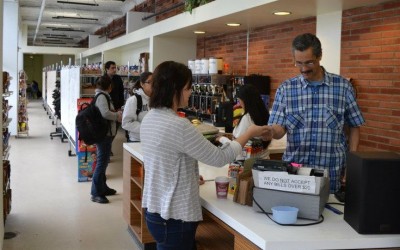
By UCLA Samueli Newsroom [social_share_button]In January, Café by the SEAS opened in a new larger and brighter space on Boelter Hall’s 5th floor breezeway, just across from its previous location. The new location has been a hit with students. More tables and outlets...