

Class of 2018 celebrated at commencement
The UCLA Samueli School of Engineering held its 2018 commencement on Saturday, June 16, at Pauley Pavilion. Approximately 770 bachelor’s degrees, 425 master’s degrees, and 110 doctoral degrees were conferred at the ceremony. More than 9,000 family members and friends of the graduates attended.

2018 UCLA Samueli Commencement Awards
Each year the seven departments of the UCLA Samueli School of Engineering, and the school as a whole, bestow honors on graduating students who have had distinguished accomplishments and made special contributions .

CONGRATULATIONS CLASS OF 2018
As newly minted Samueli engineers go off to pursue great things, two class members share their story on how access to educational and financial resources, an engaged support system, and hard work prepared them for graduation and life beyond UCLA.
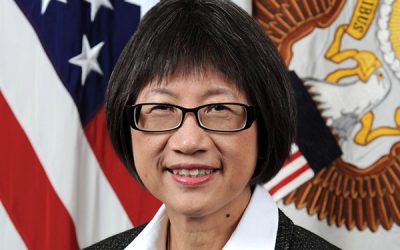
The 2018 Samueli Commencement speaker: The Honorable Heidi Shyu MS ’81, Engr ’82
We are pleased to announce the Honorable Heidi Shyu MS ‘81, Engr ‘82 will address this year’s graduating class at commencement on June 16 at Pauley Pavilion.
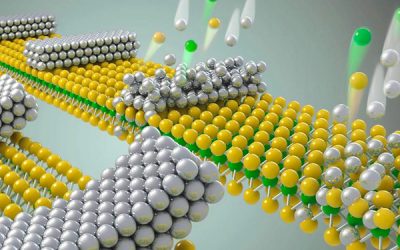
Tiny defects in semiconductors created ‘speed bumps’ for electrons. UCLA researchers cleared the path
New technique could improve electronics’ energy efficiency by removing the microscopic flaws usually formed during manufacturing
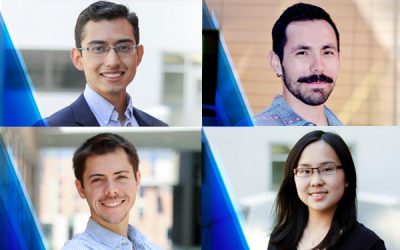
Four UCLA Engineering students receive 2018 NSF Graduate Fellowships
Four UCLA Engineering students – two graduate students and two undergraduates — have received prestigious Graduate Research Fellowship from the National Science Foundation for 2018.
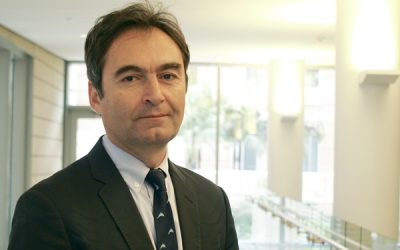
Taciroglu named Civil and Environmental Engineering Department Chair
Professor Ertugrul Taciroglu has been appointed chair of the Civil and Environmental Engineering Department at the UCLA Samueli School of Engineering.
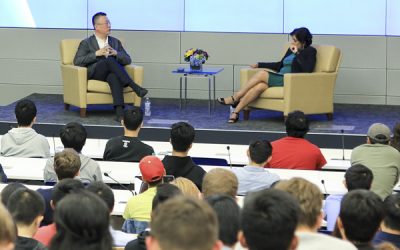
Freeman Shen: Creating electric cars for China’s middle class
Veteran auto industry executive Freeman Shen MS ’94 discussed the state of China’s car industry and its challenges with a few hundred UCLA students.

Tiny batteries built like skyscrapers
For batteries to fit into tinier electronic devices without compromising performance they need “to be built like a skyscraper in New York instead of a ranch house in California,” says Bruce Dunn.