
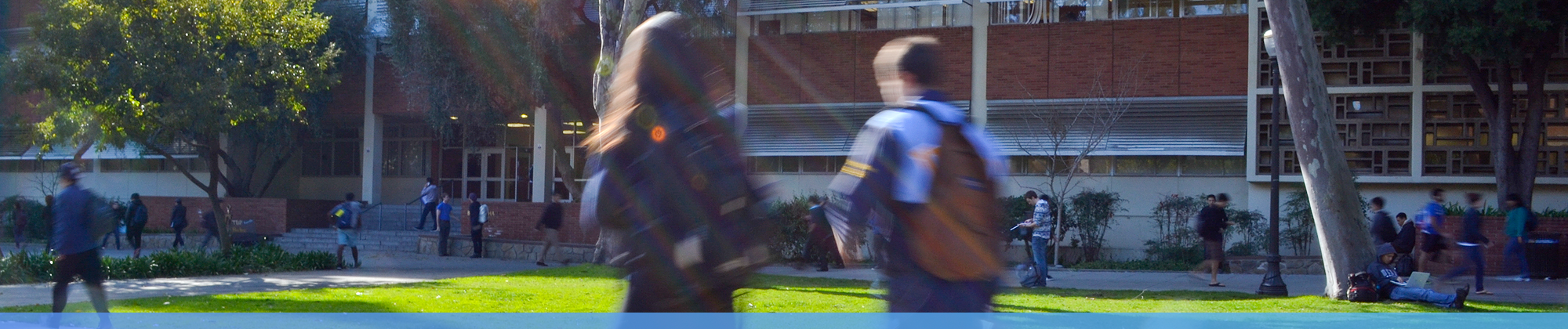
Transforming Southern California and the World
The UCLA Henry Samueli School of Engineering and Applied Science includes more than 6,500 undergraduate and graduate students and 190 full-time faculty members. Established in 1945, UCLA Samueli is known as the birthplace of the internet, and where countless other fields took some of their first steps — from artificial intelligence to reverse osmosis, from mobile communications to human prosthetics.
The school academic departments include Bioengineering, Chemical and Biomolecular Engineering, Civil and Environmental Engineering, Computer Science, Electrical and Computer Engineering, Materials Science and Engineering, and Mechanical and Aerospace Engineering, as well as the recently added Department of Computational Medicine, which is affiliated with both the David Geffen School of Medicine and Samueli. In addition, UCLA Samueli offers the Master of Science in Engineering Online program and a Master of Engineering professional degree program.
In 2000, the engineering school was re-named in honor of alumnus Henry Samueli, following a $30 million gift that supported capital improvements as well as fellowships for graduate students and early career faculty. In 2019, Samueli and his wife Susan gave another gift of $100 million to support the school’s expansion well into the next decade.
UCLA Samueli is in the midst of an extraordinary period of growth, with expansion in the number of research labs, faculty and students. New faculty will bring expertise in emerging research areas, such as engineering in medicine, quantum technologies, and sustainable and resilient urban systems.
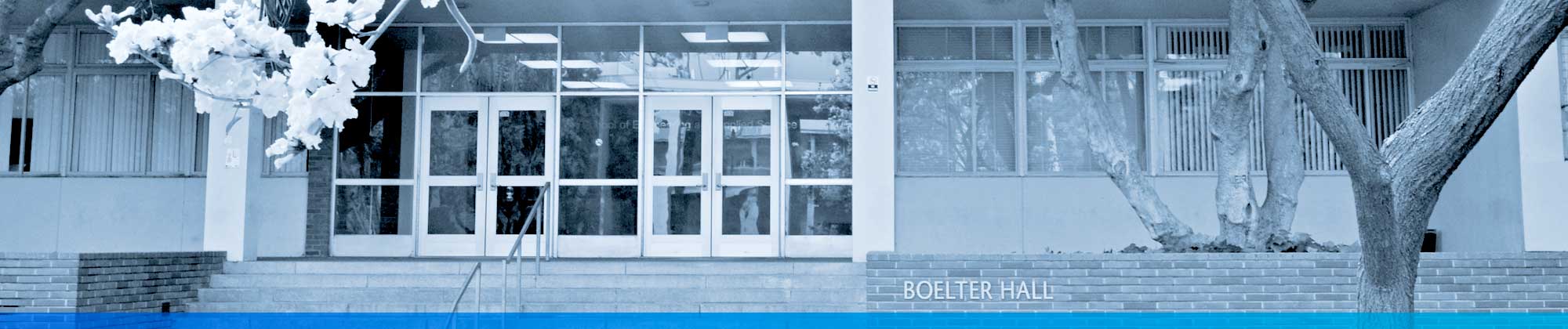
The school’s facilities include four major buildings — Boelter Hall, Engineering-IV, Engineering-V and Engineering-VI. Recent renovations have added the Student Creativity Center — home to many of its student organizations, and the Innovation Laboratory — a makerspace for hands-on learning and creativity.
The school is ranked No.1 as of 2023 for its online master’s program by U.S. News & World Report.
To see what makes the UCLA Samueli School of Engineering so special, book a tour with one of our Engineering Ambassadors on campus, and download our Viewbook.
News
UCLA researchers find antibiotic-resistant genes in California parks
By UCLA Samueli Newsroom [social_share_button]Overuse has led to superbugs that resist even some powerful antibiotics The anxiety over antibiotic-resistant superbugs, which are responsible for 23,000 deaths a year in the United States, is likely to grow in California,...
Alumnus Adam Cheyer, UCLA Optimist on “Life In the Future”
By UCLA Samueli Newsroom [social_share_button]UCLA Engineering alumnus Adam Cheyer MS ’93, co-founder of Siri, Viv Labs and Change.org, is featured in the latest UCLA Optimists discussion, titled “Life in The Future.” The panelists cover how artificial intelligence...
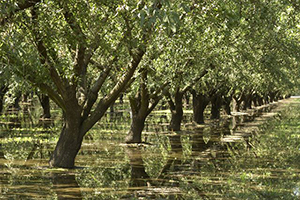
UCLA-led researchers track groundwater loss during drought in California’s Central Valley
By UCLA Samueli Newsroom [social_share_button]Adding to the severity, the drought coincided with a transition from row crops to more thirsty tree crops A new study by researchers from UCLA and the University of Houston reveals significant groundwater loss in...
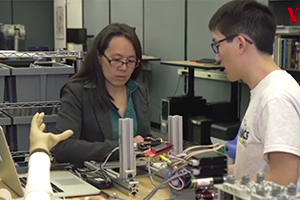
Robotics group featured in Voice of America’s Spanish Language site
By UCLA Samueli Newsroom [social_share_button]Voice of America’s Spanish language site, Voz de América, recently featured Professor Veronica Santos and her Biomechatronics Laboratory. Santos, an associate professor of mechanical and aerospace engineering, described...
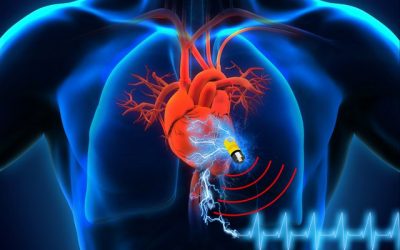
Battery-free implantable medical device draws energy directly from human body
By UCLA Samueli Newsroom [social_share_button]UCLA and University of Connecticut scientists design supercapacitor that could make pacemakers and other instruments safer and more durable Researchers from UCLA and the University of Connecticut have designed a new...
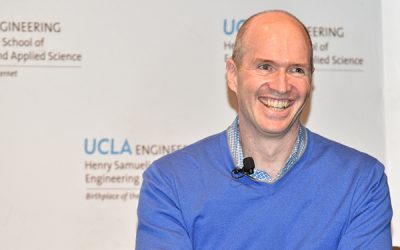
Silicon Valley Venture Capitalist Ben Horowitz MS ’90 on business leadership
Ben Horowitz MS ’90, co-founder and general partner of Silicon Valley venture capital giant Andreessen Horowitz, spoke to nearly 500 UCLA students at Ackerman Grand Ballroom. The event was the fourth and final program of the year in the inaugural Ronald and Valerie Sugar Distinguished Speaker Series.