
From Homemade Cooking in Santa Barbara to Lab Research in Switzerland: Bioengineering Undergrad Brings Global Perspective to Healthy Living
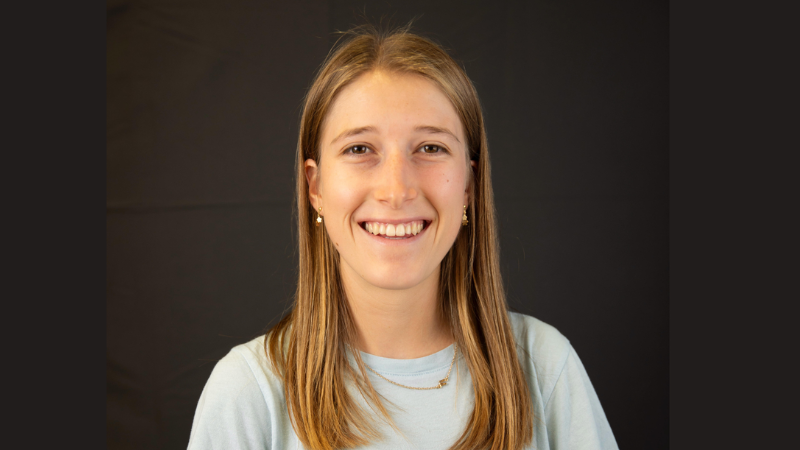
In the Santa Barbara home where Margherita Scussat and her younger brother grew up, their Italian-immigrant parents regularly made tomato sauce from scratch and whipped up nutritious plates of fish and fresh vegetables. Immersed in a bilingual culture with an emphasis on healthy diet and lifestyle, Scussat has always loved cooking and is intrigued by technologies that can help people live healthier lives.
Now a rising fourth-year bioengineering student at the UCLA Samueli School of Engineering, Scussat not only speaks Italian and English but has also taken up Spanish. She spent a semester last year studying in Madrid, Spain, through UCLA’s Education Abroad Program and more recently traveled to Guatemala, where she spent two weeks living with a host family. This summer, she is working as a research intern at the École Polytechnique Fédérale de Lausanne in Switzerland, studying organoid tissue engineering for cancer treatment.
“Health is a universal concern, and many bioengineering innovations are designed to improve quality of life for people around the world,” Scussat said. “Developing effective healthcare solutions requires not only technical expertise but also an understanding of the cultural, economic and social contexts in which they will be used.”
At UCLA Samueli, Scussat is an undergraduate researcher in the lab of Dino Di Carlo, a professor and chair of the Bioengineering Department. She has been working on a project that utilizes tiny, bowl-shaped hydrogels to isolate individual cells and identify those that secrete biomolecules with potential to treat disease.
Scussat did not always plan on studying engineering. Throughout middle school and early high school, she loved writing and history and thought she might become a lawyer. After competing in mock trial for two years, however, she decided law was not the right fit. At the same time, she became increasingly interested in science, technology, engineering and mathematics classes in high school. She also had the opportunity to work alongside UC Santa Barbara scientists on ecological restoration and groundwater-monitoring projects, which showed her the appeal of applying science to real-world problems.
““Developing effective healthcare solutions requires not only technical expertise but also an understanding of the cultural, economic and social contexts in which they will be used,” said Margherita Scussat.
When it came time to choose a college major, she picked bioengineering because it blends engineering and the life sciences.
Since arriving at UCLA, Scussat has made the Dean’s Honors List every quarter and been awarded scholarships from UCLA Samueli, the Alumni Scholars Club and the Alpha Lambda Delta honor society. She is also a member of Tau Beta Pi, the engineering honor society.
To apply what she has learned in the classroom, Scussat has completed several internships, including at Apeel Sciences, a Santa Barbara company that develops a plant-based edible coating to keep produce such as citrus and avocados fresh longer, reducing food waste and plastic packaging. There, she tested whether essential oil nanoemulsions could slow mold growth on fruit. At Bio SB Inc., she conducted quality-control immunohistochemistry tests and compiled literature reports on antibody products. She also studied kidney stone formation and the progression of polycystic kidney disease at UC Santa Barbara’s Weimbs Lab.
Outside of academics, Scussat volunteers with Bruin Dine, a student group that recovers and redistributes leftover dining hall food to those in need. She serves as external vice president of Bruin Club Tennis and has been involved with the Alumni Scholars Club for two years, helping organize events such as My Last Lecture, a student-nominated faculty award. Speakers during her time with the club have included Nobel laureate Andrea Ghez, a UCLA professor of physics and astronomy.
After graduation, Scussat plans to pursue a Ph.D. focusing on tissue engineering. Across her diverse research experiences, she says she sees a common thread rooted in the global perspective and emphasis on healthy living instilled by her parents.
“Bioengineering enables me to contribute to novel technologies that help more people live healthier lives,” Scussat said. “Too many people in the world lack access to the resources required to optimize their health, which I hope to help change.”