

Engineers make the impossible possible.
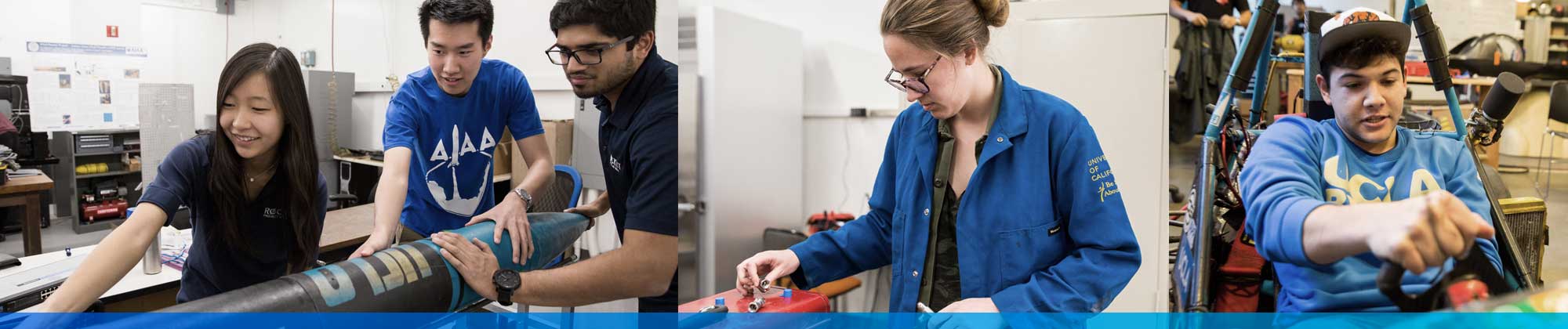
For undergraduates, UCLA Samueli will prepare you for success in meeting the ever-changing demands of the engineering profession. The curriculum emphasizes breadth as well as depth. Classes are led by faculty members who are world leaders in their field. Numerous research opportunities are available for undergraduates. And the school has a thriving group of engineering student organizations, which offer undergraduates a chance to collaborate with their peers and make lifelong friends.
While a UCLA Samueli engineering degree often leads to an engineering career, it can also be a starting point for a wide range of career paths. UCLA Samueli alumni have successful careers in medicine, law, business, the arts, government, research, academics and other fields.
Plus, in addition to your engineering education, you can also enrich your experience in the intellectually vibrant and culturally energetic community of UCLA. The campus calendar is stacked with film festivals, lectures, art exhibitions, and more. Artists from around the world perform at Royce Hall, while UCLA Athletics offers a rich tradition with home venues that include the legendary Pauley Pavilion and the historic Rose Bowl in Pasadena, and more NCAA team championships than any other school in the country.
And finally, UCLA is located in one of the world’s great cities – Los Angeles.
For an excellent, well-rounded educational experience, UCLA Samueli has it all.
Bioengineers solve problems in biology and medicine by applying principles of physical sciences and engineering while applying biological principles to create new engineering paradigms, such as biomimetic materials, DNA computing, and neural networking.
Chemical engineers work in the biochemical and petroleum industries, and in areas such as energy, nanotechnology, systems engineering, biotechnology and biomedical engineering, and advanced materials processing, as well as overseeing the chemical process in many industries.
Civil engineers plan, design, construct, and manage a range of physical systems, such as buildings, bridges, dams and tunnels, transportation systems, water and wastewater treatment systems, coastal and ocean engineering facilities, and environmental engineering projects, related to public works and private enterprises.
Computer scientists are concerned with the design, modeling, analysis, and applications of computer-related systems. They work in areas such as computer system architecture, computer networks, distributed computer systems, programming languages and software systems, information and data management, artificial intelligence, computer science theory, computational systems biology and bioinformatics, and computer vision and graphics
Electrical engineers develop circuits, devices, algorithms, and theories that can be used to sense data, analyze data, extrapolate data, communicate data, and take action in response to the data collected.
Materials engineers are concerned with the structure and properties of materials used in modern technology. They build on the foundation of materials science and work to improve the design, fabrication, and optimal selection of engineering materials, and create new materials.
Mechanical engineers apply principles of mechanics, dynamics, and energy transfer to the design, analysis, testing, and manufacture of consumer and industrial products. They create machines used in manufacturing, mechanical components of electronics, engines and power-generating equipment, vehicles and their components, artificial components for the human body, and many other products.

UCLA Samueli Announces 2026 Excellence in Teaching Awards
Each year, the UCLA Samueli School of Engineering honors alumni, faculty and students for outstanding achievements in their fields.

UCLA Computer Scientist Saadia Gabriel Receives Amazon Research Award to Advance AI for African Languages
Saadia Gabriel, an assistant professor of computer science at the UCLA Samueli School of Engineering, has received an Amazon Research Award to develop artificial intelligence and natural language processing models that better support African languages.
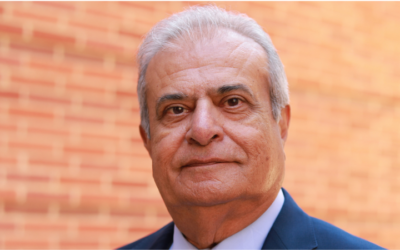
UCLA Distinguished Scientist Asad Madni Elected Fellow of Royal Society of Canada
Asad Madni ’69, M.S. ’72, a distinguished adjunct professor of electrical and computer engineering at the UCLA Samueli School of Engineering, has been elected a fellow of the Royal Society of Canada, one of the country’s highest honors for distinguished scholars, artists and scientists.
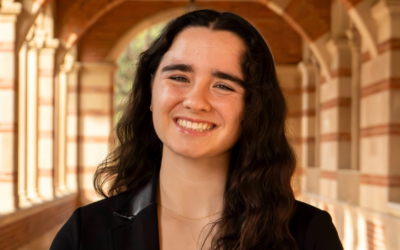
From Backyard Ziplines to Self-Driving Cars: UCLA Computer Science Student Develops Tools to Help Autonomous Vehicles Safely Share Information
One of the fondest childhood memories of Alexandra Markova was a weekend spent running around Home Depot with her father and three siblings.
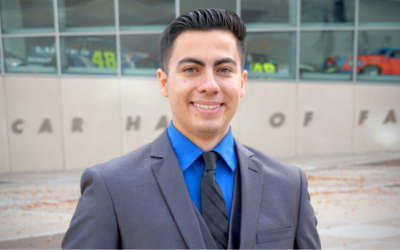
After 28 Scholarships Fund His UCLA Education, Double Bruin First-Gen Engineer Vows to Pay It Forward
On the first day of high school, Pedro Calderon ’25, M.S. ’26 learned he hadn’t been placed in a single honors or Advanced Placement class. The next morning, he went to his counselor and asked to be moved into the most rigorous courses the school offered.
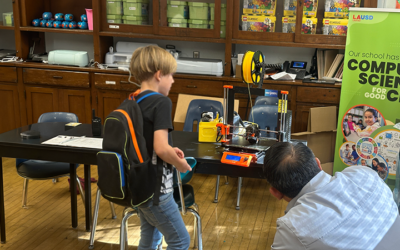
UCLA Engineering Makerspace Donates 3D Printers to L.A. Middle and High Schools, Runs Training Workshops for Teachers and Students
When the UCLA Samueli Makerspace upgraded its fleet of 3D printers last fall to keep pace with rising student demand, it left a row of working Prusa MK3S+ machines sitting in storage. Rather than let them collect dust, a team of makerspace students began plotting a second life for the printers in classrooms across Los Angeles.