
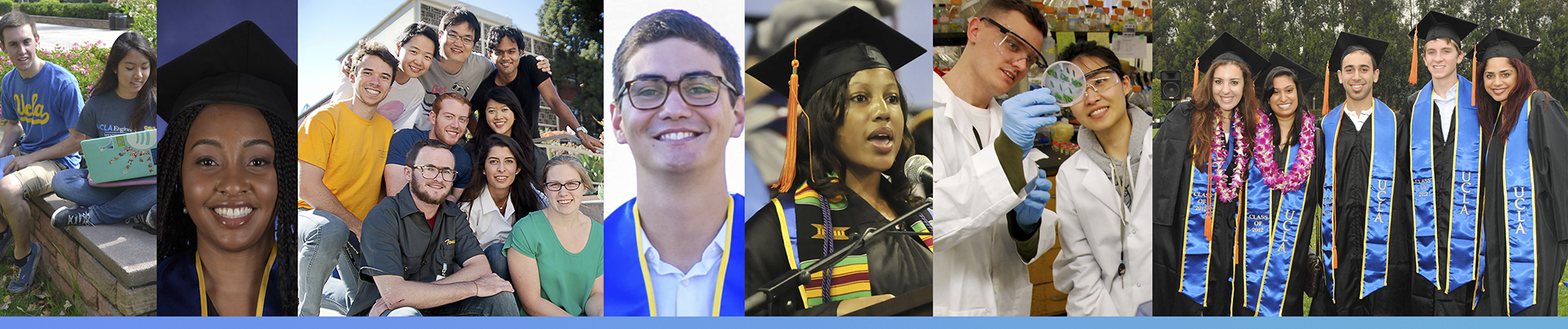
At UCLA, inclusive excellence is an indispensable element of academic success. We offer the following programs and resources designed to foster an inclusive learning environment that complements a rigorous engineering education for anyone with the talent and the desire to succeed.
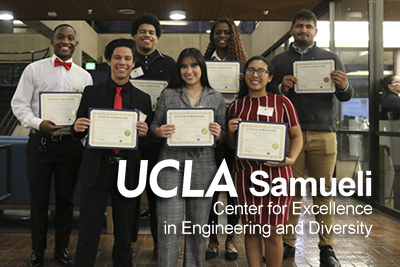
The Center for Excellence in Engineering and Diversity at the UCLA Samueli School of Engineering, known as CEED, works with a community of partners to support the K-20 pathways that lead to engineering and computer science degrees.
CEED offers many programs designed to create a community of collaborative and sustainable partnerships that offer academic and professional-development support for engineering and computer science undergraduate students who are first in their families to attend college or who have experienced socioeconomic or educational disadvantages.
On the pre-college level, the program partners with middle and high schools in the greater Los Angeles area to offer academic support, exposure to the engineering and computer science role models and opportunities to learn more about engineering and computer science through hands-on projects, workshops and classes.
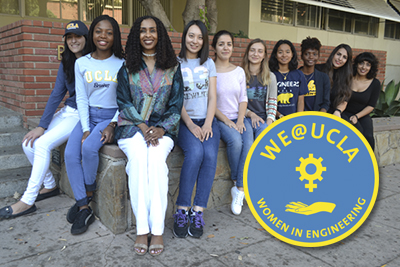
The UCLA Women in Engineering program, known as WE@UCLA, is an institutionalized student support program run by a full-time professional staff within the Dean’s office at UCLA Samueli. The mission is to enable the full participation, success and advancement of women in engineering and computer science. WE@UCLA does not require membership and is open to all UCLA Samueli students.

The Engineering Transfer Center is part of the new Engineering Resource Center. The mission at the Engineering Transfer Center is to provide resources and support to current Samueli Engineering transfer students, increase visibility and advocacy for the transfer community in the school, and build partnerships with local community colleges to support the engineering pipeline.
ACCESSIBILITY
Accessible Entrances and Entrance Paths
Disabilities – Center for Accessible Education (CAE)
COUNSELING
Therapy Assistance Online (TAO)
UCLA Campus Assault Resources and Education (CARE) Program
UCLA Counseling and Psychological Services (CAPS)
UCLA Samueli Wellness Support/Counseling and Psychological Services (CAPS)
UCLA’s Staff and Faculty Counseling Center
FINANCE & OPPORTUNITIES
UCLA Center for Scholarships & Scholar Enrichment
UCLA Economic Crisis Response Team
UCLA Financial Aid and Scholarships
Fees – Registrar Financial Distress – A Resource Guide for Students
UCLA Graduate Fellowships & Awards Search
UCLA Samueli Undergraduate Internship Program
INTERNATIONAL STUDENTS
Helping International Students Succeed — My Student Support Program (My SSP)
REPORTING
UCLA Equity, Diversity & Inclusion Incident Report
UCLA Incident of Bias Reporting Form
OTHER SUPPORT
Emotional Well Being and Safety
Students with Dependents Program
UC Federal Updates Resource Page
UCLA Resilience In Your Student Experience (RISE) Center
Where Do We Go From Here? Creating an Anti-Racist Climate of Support
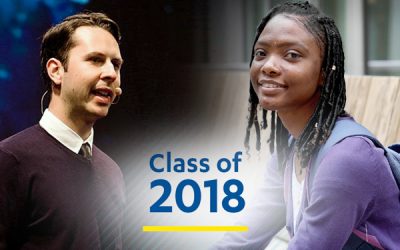
CONGRATULATIONS CLASS OF 2018
As newly minted Samueli engineers go off to pursue great things, two class members share their story on how access to educational and financial resources, an engaged support system, and hard work prepared them for graduation and life beyond UCLA.
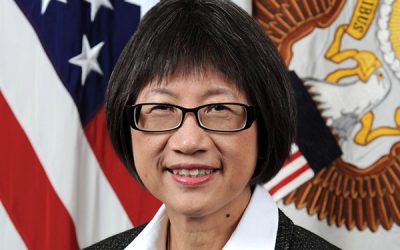
The 2018 Samueli Commencement speaker: The Honorable Heidi Shyu MS ’81, Engr ’82
We are pleased to announce the Honorable Heidi Shyu MS ‘81, Engr ‘82 will address this year’s graduating class at commencement on June 16 at Pauley Pavilion.
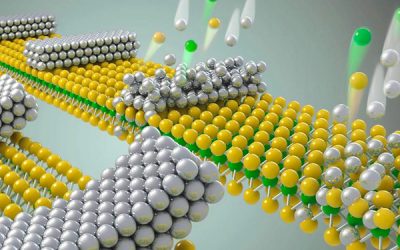
Tiny defects in semiconductors created ‘speed bumps’ for electrons. UCLA researchers cleared the path
New technique could improve electronics’ energy efficiency by removing the microscopic flaws usually formed during manufacturing
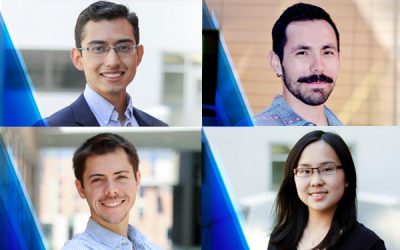
Four UCLA Engineering students receive 2018 NSF Graduate Fellowships
Four UCLA Engineering students – two graduate students and two undergraduates — have received prestigious Graduate Research Fellowship from the National Science Foundation for 2018.
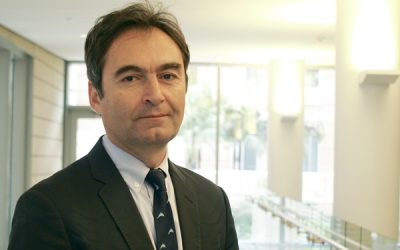
Taciroglu named Civil and Environmental Engineering Department Chair
Professor Ertugrul Taciroglu has been appointed chair of the Civil and Environmental Engineering Department at the UCLA Samueli School of Engineering.
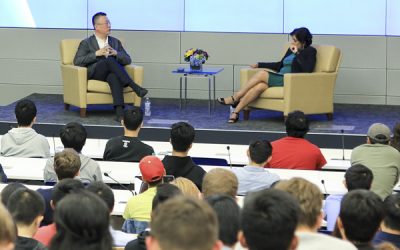
Freeman Shen: Creating electric cars for China’s middle class
Veteran auto industry executive Freeman Shen MS ’94 discussed the state of China’s car industry and its challenges with a few hundred UCLA students.