
Transforming Southern California and the World
The UCLA Henry Samueli School of Engineering and Applied Science includes more than 6,500 undergraduate and graduate students and 190 full-time faculty members. Established in 1945, UCLA Samueli is known as the birthplace of the internet, and where countless other fields took some of their first steps — from artificial intelligence to reverse osmosis, from mobile communications to human prosthetics.
The school academic departments include Bioengineering, Chemical and Biomolecular Engineering, Civil and Environmental Engineering, Computer Science, Electrical and Computer Engineering, Materials Science and Engineering, and Mechanical and Aerospace Engineering, as well as the recently added Department of Computational Medicine, which is affiliated with both the David Geffen School of Medicine and Samueli. In addition, UCLA Samueli offers the Master of Science in Engineering Online program and a Master of Engineering professional degree program.
In 2000, the engineering school was re-named in honor of alumnus Henry Samueli, following a $30 million gift that supported capital improvements as well as fellowships for graduate students and early career faculty. In 2019, Samueli and his wife Susan gave another gift of $100 million to support the school’s expansion well into the next decade.
UCLA Samueli is in the midst of an extraordinary period of growth, with expansion in the number of research labs, faculty and students. New faculty will bring expertise in emerging research areas, such as engineering in medicine, quantum technologies, and sustainable and resilient urban systems.
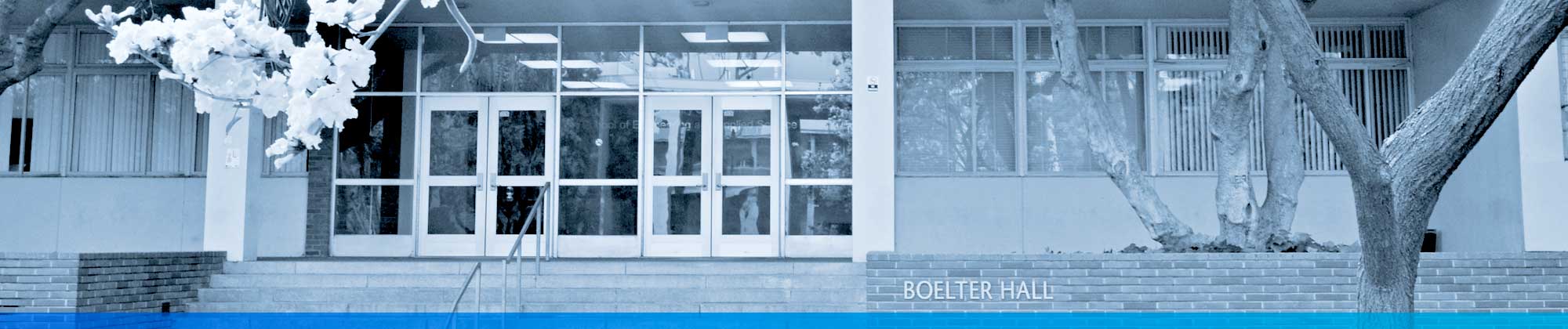
The school’s facilities include four major buildings — Boelter Hall, Engineering-IV, Engineering-V and Engineering-VI. Recent renovations have added the Student Creativity Center — home to many of its student organizations, and the Innovation Laboratory — a makerspace for hands-on learning and creativity.
The school is ranked No.1 as of 2023 for its online master’s program by U.S. News & World Report.
To see what makes the UCLA Samueli School of Engineering so special, book a tour with one of our Engineering Ambassadors on campus, and download our Viewbook.
News
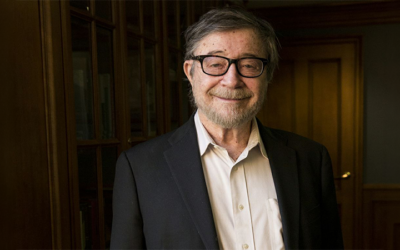
At 90, UCLA’s Judea Pearl Is Still Asking the Big Questions
Judea Pearl has spent most of his life thinking about some of the hardest questions there are.
How can machines reason when they don’t have all the information? How can scientists distinguish correlation from cause and effect?
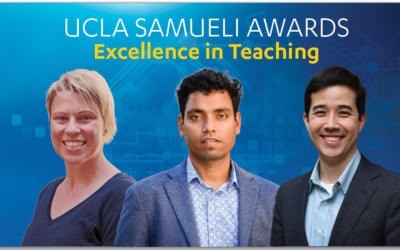
UCLA Samueli Announces 2026 Excellence in Teaching Awards
Each year, the UCLA Samueli School of Engineering honors alumni, faculty and students for outstanding achievements in their fields.

UCLA Computer Scientist Saadia Gabriel Receives Amazon Research Award to Advance AI for African Languages
Saadia Gabriel, an assistant professor of computer science at the UCLA Samueli School of Engineering, has received an Amazon Research Award to develop artificial intelligence and natural language processing models that better support African languages.
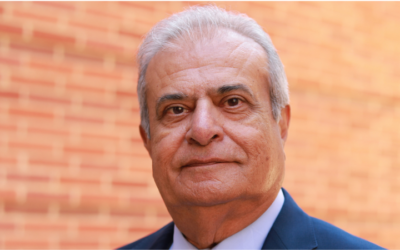
UCLA Distinguished Scientist Asad Madni Elected Fellow of Royal Society of Canada
Asad Madni ’69, M.S. ’72, a distinguished adjunct professor of electrical and computer engineering at the UCLA Samueli School of Engineering, has been elected a fellow of the Royal Society of Canada, one of the country’s highest honors for distinguished scholars, artists and scientists.
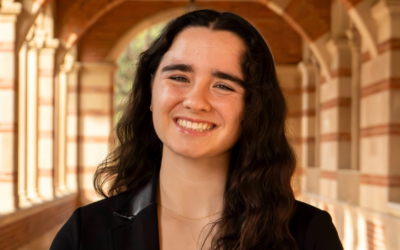
From Backyard Ziplines to Self-Driving Cars: UCLA Computer Science Student Develops Tools to Help Autonomous Vehicles Safely Share Information
One of the fondest childhood memories of Alexandra Markova was a weekend spent running around Home Depot with her father and three siblings.
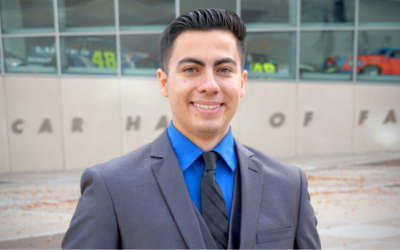
After 28 Scholarships Fund His UCLA Education, Double Bruin First-Gen Engineer Vows to Pay It Forward
On the first day of high school, Pedro Calderon ’25, M.S. ’26 learned he hadn’t been placed in a single honors or Advanced Placement class. The next morning, he went to his counselor and asked to be moved into the most rigorous courses the school offered.