How Two UCLA Engineering Students Built a Self-Playing Piano That Can Do the Impossible
The duo designed an electrical system to play all 88 keys simultaneously — one they had not seen in other self-playing piano designs
Click the play button on the image to watch the video. The YouTube link also has an audio descriptive version.
UCLA Samueli Newsroom
It’s the best project in the nearly eight years that the UCLA Samueli School of Engineering’s Makerspace has been open, according to bioengineering professor Jacob Schmidt, who oversees the space.
Two students — Karina Bender and George Grigoryan — and one piano that plays songs. Months of planning, designing, building, testing, frustration, roadblocks … redesigning … and success! And most of all, fun.
Allegro
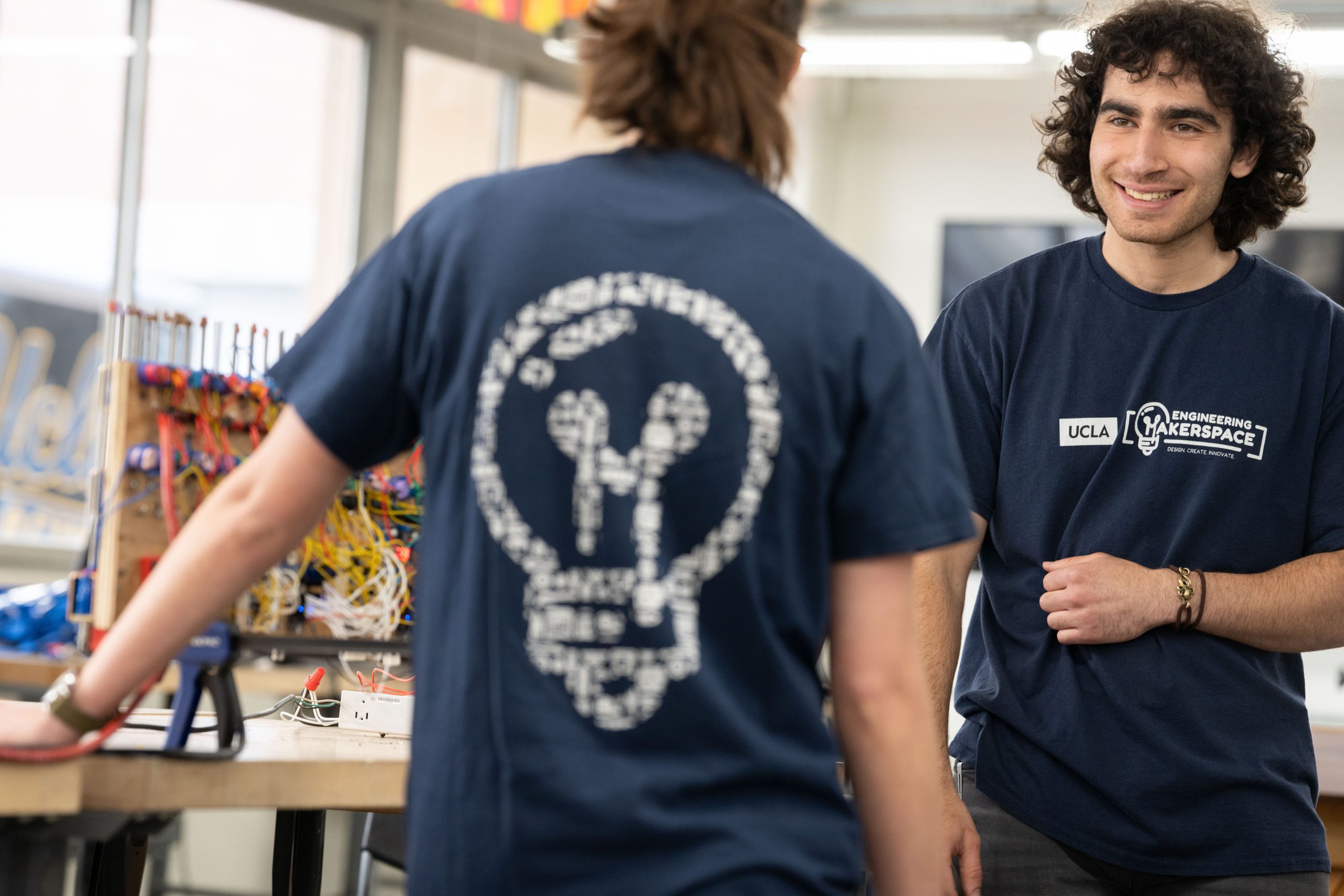
“Robots, planes, drones — those are the first things that come to mind when you think of an engineering project,” said Bender, a makerspace technician who’s finishing up a master’s degree in mechanical engineering. “And that is most certainly what you see when you go into the makerspace: You see all of these robots and parts and whatnot on the shelves that other people have built. People have made, like their own little video game controllers. People have made custom keyboards, which I think is really, really cool!”
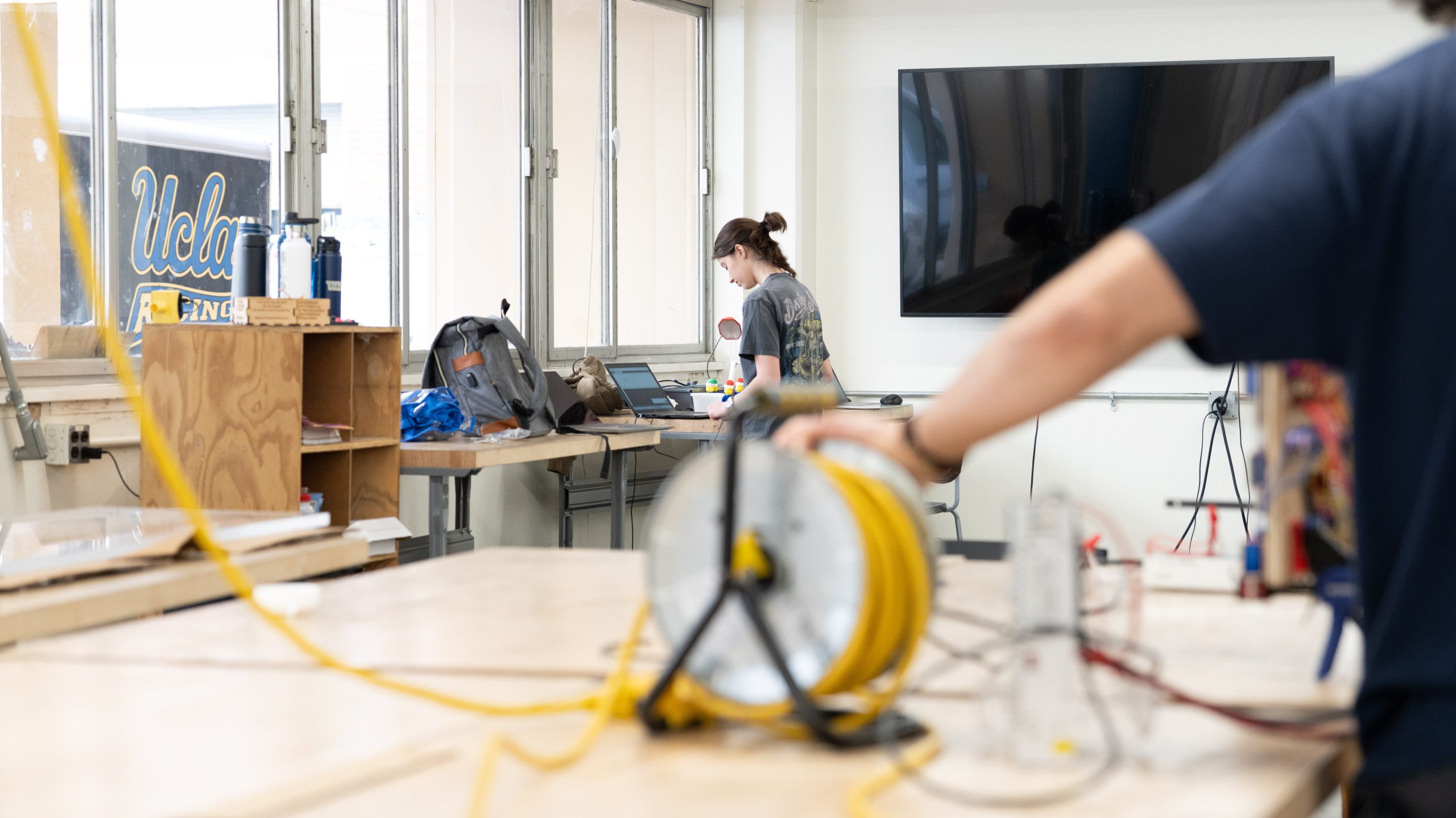
The Engineering Makerspace, which offers 3D printers, laser cutters, electronics fabrication tools and a fully stocked workshop, buzzes with activity in the bottom two levels of Boelter Hall. More than a dozen introductory engineering classes are taught there; it’s used by students in capstone courses building their final projects and many more making their own creations. Schmidt estimates it receives over 10,000 visits from thousands of students each academic quarter.
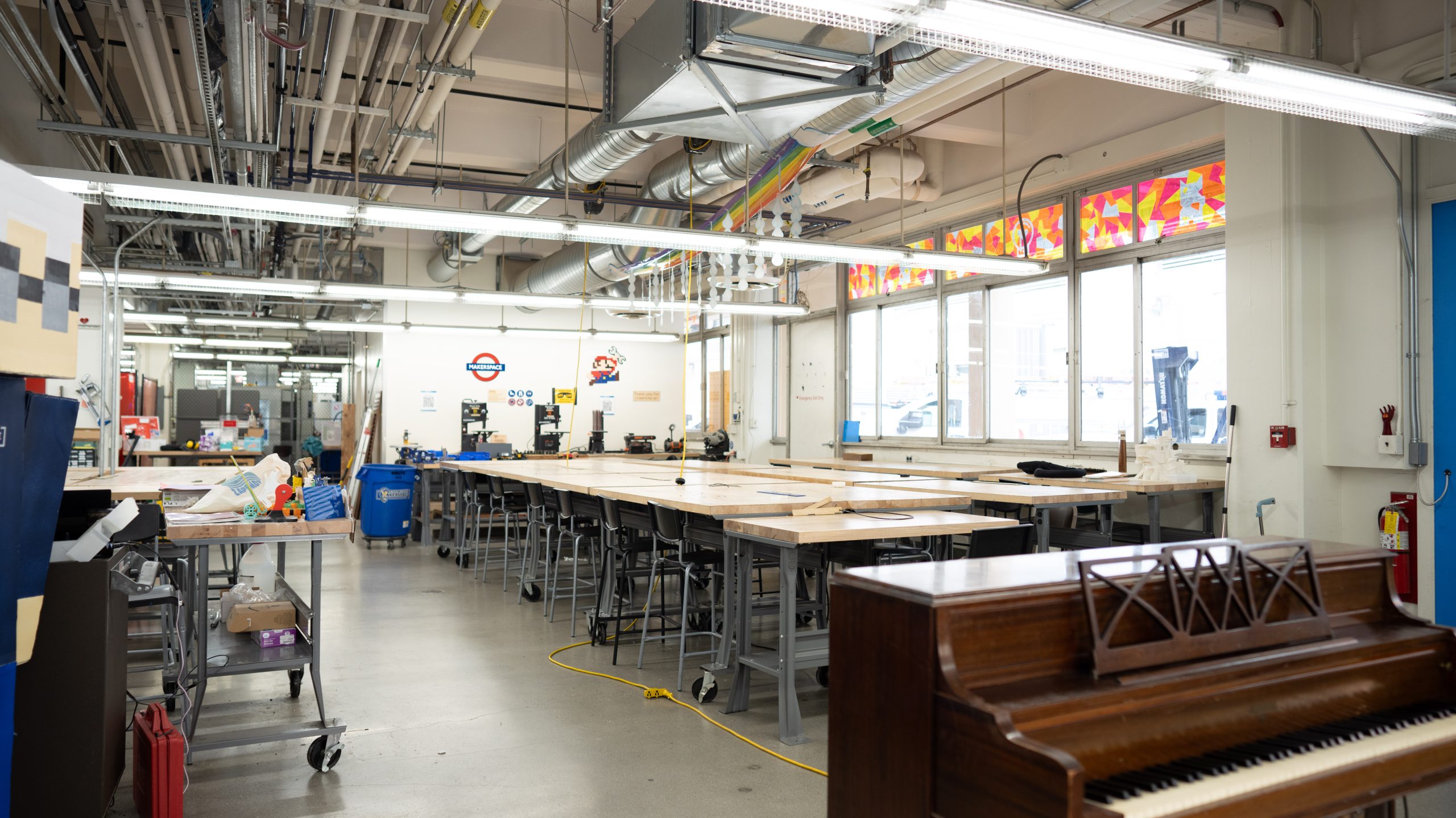
Current and ongoing projects abound. And in a corner of the first level, a piano. Walk in at the right time — and you might get to see it play itself.
“It’s still definitely an engineering project, obviously, but it has this very unique aspect to it,” said Bender, who also plays piano as a longtime hobby. “It’s musical, it’s fun; it’s just different. So I wanted that little aspect of differentness, and we really wanted to see if we could pull it off.”
In fall 2024, Bender brought the player piano idea to fellow makerspace technician Grigoryan. As a practical project, it meant designing and building many mechanical and electrical components and had to be something people could appreciate once finished. Even though the idea sounded ambitious, he joined in.
“It was really the final idea of what it could be,” said Grigoryan, who graduates this month with a bachelor’s in aerospace engineering. “We always have music playing in the space, and she was like, ‘How cool would it be if that music was coming from a piano, and that piano was also playing itself?’” Professor Schmidt, however, had major concerns. One actuator to press a single key is relatively simple. Adding 87 more keys multiplies the hardware, actuators, wiring and requires a power supply and programming, all of which must work together and fit inside the piano. That’s a lot of time, especially for students with classes, jobs and other commitments.
“I was worried that the project would be started and unfinished,” said Schmidt, vice chair of undergraduate student affairs in the Bioengineering Department. “But they were insistent and enthusiastic. And I knew that if they were able to pull it off, it would be a showpiece for our space, so I was sold on their pitch.”
Schmidt greenlit the idea early that quarter. Bender and Grigoryan found a second-hand upright piano near campus through an online marketplace and had it delivered to the makerspace a few weeks later.
Adagio
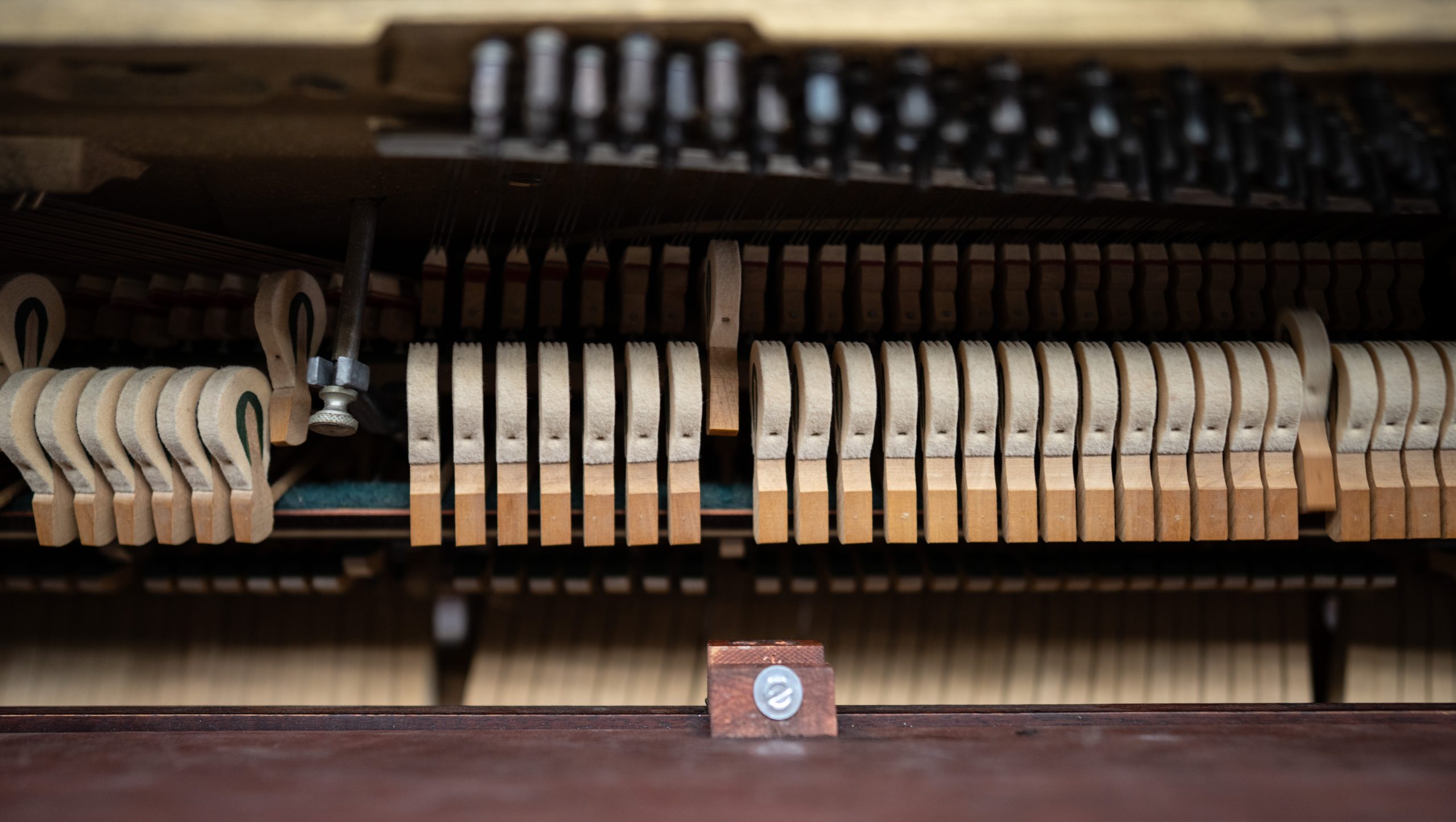
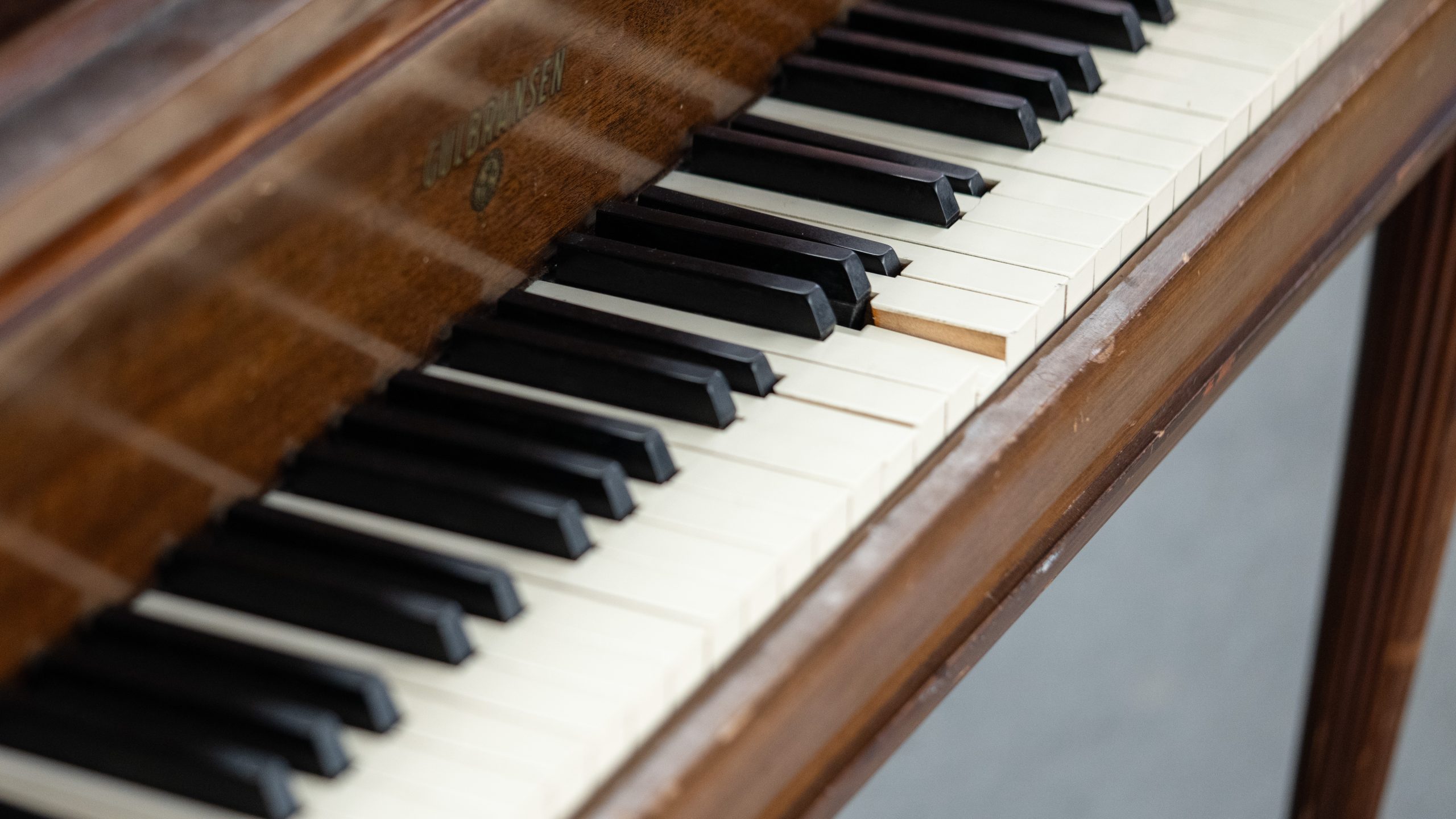
A piano key is really a lever. After pushing down, a hammer on the other end of the lever hits its corresponding strings. There are 88 of those — from a low A three octaves below middle C to a high C four octaves above it. Bender and Grigoryan were making something that could hit each of those 88 levers from the underside, corresponding with signals from a digital file played on a laptop.
The pair started in earnest in spring 2025. The first three months were heavy on planning and prototyping. They had to figure out how to build the electronic components, make them communicate with each other and set up the hardware to fit inside the piano. There are a few examples of homemade player pianos on the internet, but Bender and Grigoryan also wanted to make something as impressive and unique as possible.
They returned to the makerspace in late summer 2025 to resume working on it.
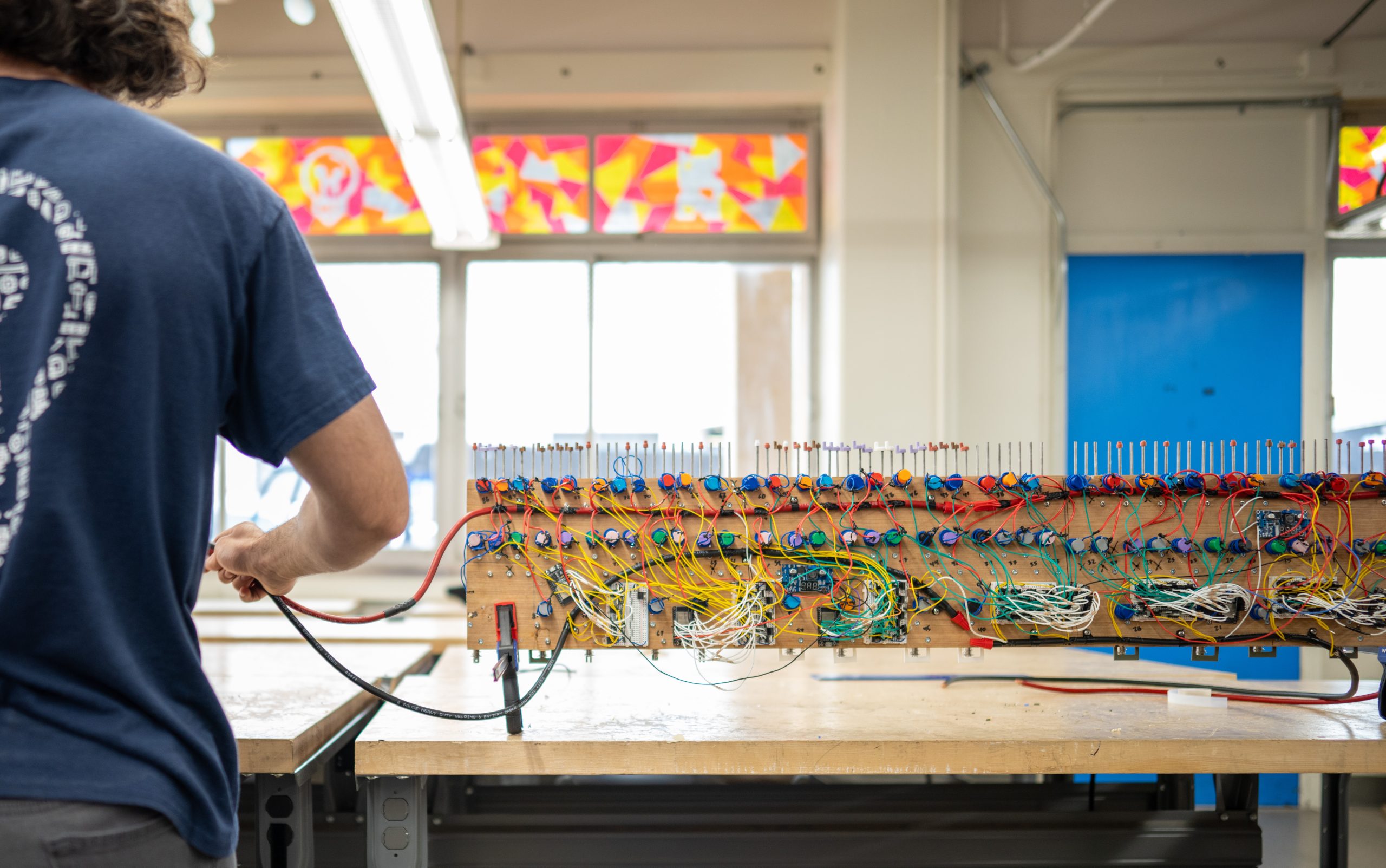
“Every week we would have a piano workday where we would just spend basically the entire day working on the piano, figuring out another problem,” Grigoryan said.
The three main parts to making the player piano work are software, electrical components and hardware. It needs an input to play a song from their laptop. They used MIDI files, a digital format that dates back to the 1980s. The software interprets the file, transmitting one pulse per note to a group of microcontrollers that control the hardware.
The device hardware that hits the key from underneath is a solenoid — a piston that moves up when an electrical signal activates it. They started to see how it works.
“We were initially sizing the solenoids,” Grigoroyan said. “We started out very small and it wasn’t strong enough, and we got bigger, and it still wasn’t strong enough. At a certain point, we got to a size that was strong enough, but it wouldn’t fit in the actual footprint of the piano. And there was a moment where we just sat down and were like, ‘there’s no way this is going to work.’”
They solved the problem by staggering the solenoids across the custom interior board into three rows, using longer rods from the ones farther away from the keys. But when they put the board in place, a new issue became apparent.
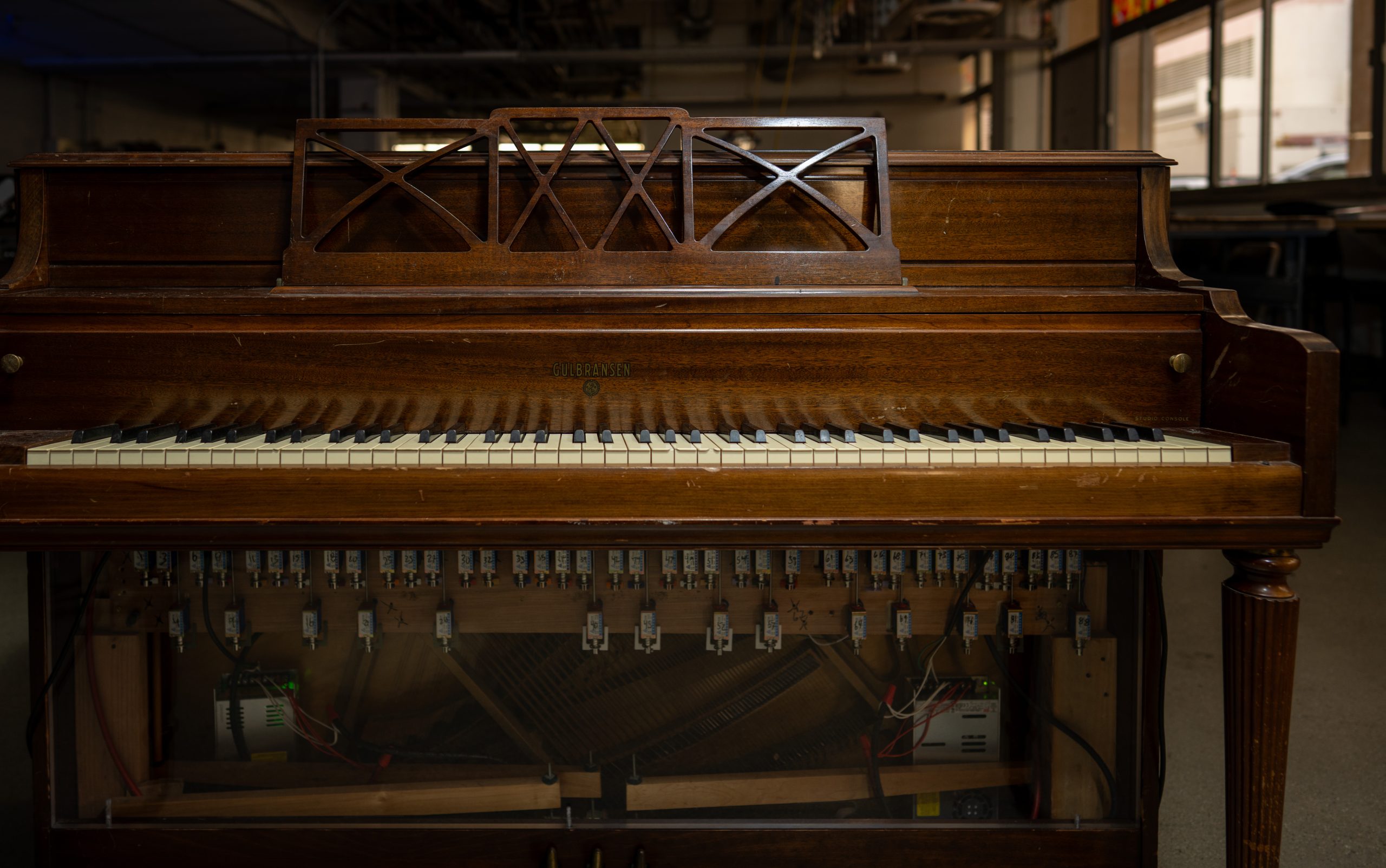
“We figured that we were almost done and put the board into the piano, and all of the solenoids underneath just didn’t line up with the keys at all,” Bender said, recalling one particularly long day. “And for the life of us, we couldn’t figure out why.”
There were two problems. First, some of the longer rods were not aligned precisely with their corresponding string. On those, they capped the rods with 3D-printed aligners to get them at the right key. Also, some of the rods were rotating out of position and not hitting the keys. The pair designed an “anti-rotating” holder at the bottom of the solenoids to keep them in line with their corresponding keys.
Now it was ready. Almost.
“When the piano played for the first time, it played very, very poorly,” Bender said. “It wasn’t like the grand hurrah. We heard it play, and we went, ‘wow, that sounds bad.’ But it was nice, because it was proof of concept that we were on the right track.”
The breakthrough came late on Nov. 3, 2025.
“A couple iterations later, when we fixed all the alignment, when we got everything together, when it played that first song recognizably,” said Bender, noting it was Frédéric Chopin’s “Revolutionary Étude in C Minor,” one of her personal favorites. “That’s when that moment happened.”
The short Romantic-era composition features a bass line of descending arpeggios joined by a melody of bold chords.
“When I first heard music come out of the piano, I was thrilled,” Grigoryan said. “I never had one of those ‘yippee!’ moments when something was done when I was like, ‘Oh, this is so cool!’
Presto
But they had one more step to go.
In addition to getting everything to work, the duo also wanted to push the limits of a self-playing piano. Designing its electrical system to handle enough current to play all 88 keys simultaneously is a tough task — one they had not seen in other self-playing piano designs. It’s also not practical, but they wanted to reach that stretch goal.
“If you’re trying to mimic a person playing the piano, why would you need more than 10 keys at one point?” Bender asked. “And we said, ‘No. This is not a person playing a piano. This is a system playing a piano.’ And, therefore, we wanted to be able to play all 88.”
And there was a perfect song for that all-keys-slammed-at-once stress test. It’s called “Rush E,” a mid-2010s meme song with consecutive hits of E keys, crisscrossing glissandos that slide up and down the keys, and all 88 keys a few times at the end. It’s physically impossible for one person to play it.
That meant powering all 88 solenoids, which would draw five to 10 times more current than a kitchen toaster, to send them up simultaneously. Would it short-circuit the system? Break the piano? Spark a fire? Those were all on their mind.
“When it slammed those 88 keys like all at once … that was a sight to behold,” Bender said. “That made the whole project worth it. When you think about it, it’s not like a sound that you’ve really heard in person, all 88 keys on a piano going off at the same time. And it doesn’t sound good, but it sounded amazing!”
Coda
“With school projects, once you’re done with the quarter, you’re done with the project,” Grigoryan said. “But this was a multi-quarter process, and in the back of my mind, I always knew there was a piano to work on.”
“It was a blast,” added Bender, who received a UCLA bachelor’s degree in bioengineering and mathematics in 2024, and a master’s degree in bioengineering in 2025. “There were definitely times where we were losing our minds a little bit. But again, it was on that cusp of just insanity and pure joy. And I think that’s why it ended up being such a great project.”
In a few months, Bender starts an M.D./Ph.D. program offered by the Keck School of Medicine of USC and Caltech, and Grigoryan pursues a master’s degree in mechanical engineering at the UC San Diego Jacobs School of Engineering. But first, they’ll take their piano to a science fair in San Francisco, where engineers and other creators gather to display or see projects called Open Sauce, or as the website calls it: “The festival for people who make things.”
And, for future reference, Bender and Grigoryan documented their work in a 30-page detailed instruction manual. New challenges lie ahead, like controlling the volume, for one. As of right now, it’s just one level, no piano forte for the big sounds, no soft-touch pianissimo for delicate sounds.
The pair has already recruited one fellow tech, Kion Manesh, an electrical engineering major finishing up his second year, to continue fine-tuning the makerspace’s showpiece. This means the piano will continue to star in the Engineering Makerspace.
Click this link to watch an audio descriptive version of the video.