
Dean’s Corporate Advisory Board Member
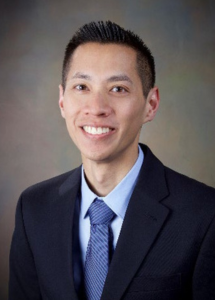
Marcus Chang ’02, M.S. ’03
Director, Cyber Threat Center
Co-Director Quantum Futures Center
Sandia National Labs
As the director of the Cyber Threat Center, Marcus Chang leads the delivery of national security capabilities and programs for the U.S. Government, focusing on cybersecurity and microelectronics R&D. The Cyber Threat Center’s mission is to advance cyber capabilities to enable intelligence superiority, deter adversarial aggression and sharpen the warfighter’s edge. Through vulnerability assessments, vulnerability research, reverse engineering and cyber R&D, his team applies cyber to various technology and mission domains, including IT, operational technology (OT), space systems, critical energy infrastructure, embedded systems, RF, AI and military technologies.
Chang also serves as the co-director of the Quantum Futures Center, where he leads the advancement of quantum capabilities for national security missions. This includes stewarding full-stack quantum R&D with a focus on integrated co-design. Previously, Chang served as the chief information security officer (CISO) and director of the Cyber Security & Mission Computing Center. In his role as CISO, he was responsible for protecting and defending Sandia’s information systems against a wide range of threats. As director of Cyber Security & Mission Computing, he oversaw a broad organization that included enterprise cybersecurity, high performance computing, nuclear deterrence product lifecycle management, software engineering, software security and cyber and computer science R&D.
Chang also previously held the position of senior manager for the Advanced Solutions Engineering organization, where he developed technical capabilities in software, cybersecurity, and data analytics across various national security domains. With over 20 years of experience at Sandia, Chang has a proven track record in
leading teams and fostering partnerships with the Department of Energy/National Nuclear Security Administration (DOE/NNSA), the Department of War (DOW), the intelligence community and other government agencies in areas such as nuclear nonproliferation, remote sensing, cybersecurity and software engineering.
Chang earned both a B.S. and M.S. in computer science from UCLA.