
Bruin Supermileage Vehicle Brings Its First Hydrogen Car to Shell Eco-marathon
Kaitlyn Wu/UCLA
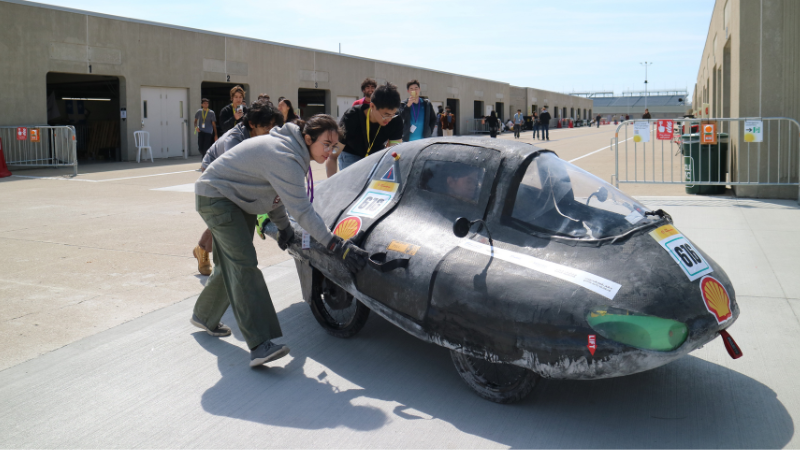
Students on the Bruin SMV team push their car to technical inspection at Indianapolis Motor Speedway
When first-year mechanical engineering student Christine Xu eased the Bruin Supermileage Vehicle up a 12-degree incline at the Indianapolis Motor Speedway this spring, three of her teammates had to push the car up the ramp by hand. Then they stepped away. The brakes held, and the team erupted.
It was the first time in three years the static incline test had worked, and minutes later, the dynamic run — in which the car rolls down the ramp and must stop on the slope — also succeeded. Those were two of the 12 technical inspections the team needed to pass to qualify for a run at the Shell Eco-marathon, an efficiency contest in which student teams from around the world attempt the same fixed-distance course using as little fuel as possible.
Even though Bruin SMV didn’t complete all of the technical inspections or record a timed run, the team fielded its strongest car in recent history and now has a promising blueprint for next year.
After several years of arriving in Indianapolis with incomplete vehicles — cars that “kind of existed but didn’t really run,” in the words of incoming external managing director Devin Huntington, a second-year mechanical engineering student — the UCLA Samueli School of Engineering team brought a vehicle that drove under its own power on a hydrogen fuel cell. It was a milestone for a club that has spent the past three years rebuilding around the competition’s most demanding category.
“Many of the core systems fundamentally worked,” said incoming internal managing director Ryan Kim, a second-year computer engineering student. “It was just a couple of small things that were a little off. Our wheels were too skinny. That was the kind of margin we were working with.”
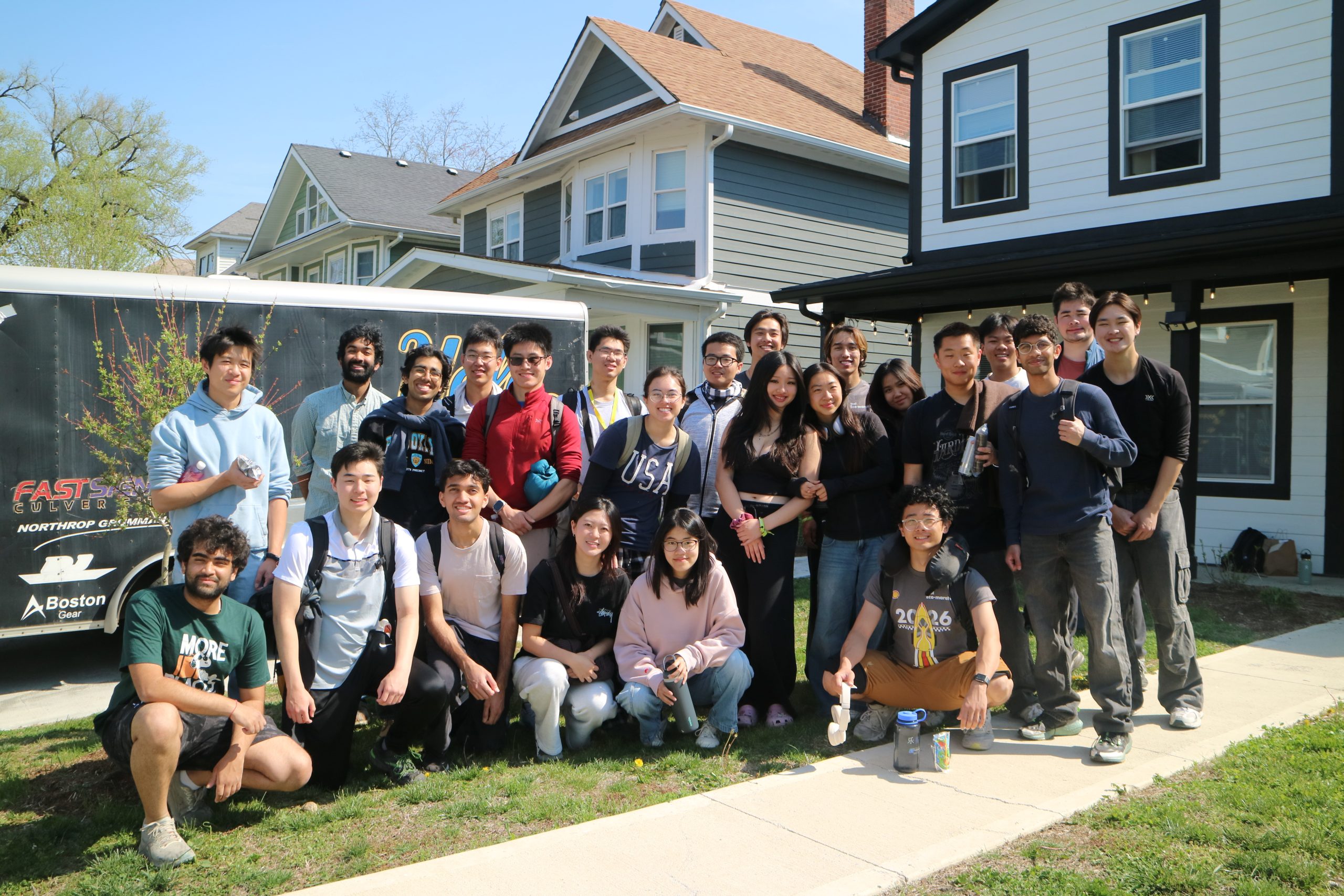
Bruin SMV is one of three teams under the Bruin Racing umbrella advised by Tim Fisher, a professor of mechanical and aerospace engineering. Each spring, its roughly 50 members travel to the Indianapolis Motor Speedway, which has hosted the Eco-marathon since the competition moved from California’s Sonoma Raceway in 2022.
About three years ago, Bruin SMV moved from the simpler Prototype class into the Hydrogen Urban Concept category, which requires road car features including headlights, taillights and wipers. The shift dramatically expanded both the design scope and the technical requirements needed to pass inspection and reach the track.
Since then, critical systems failed or remained unfinished, preventing the team from qualifying.
What changed this year
Two changes drove the turnaround. First, the team moved up its design phase from fall to the summer, freeing fall and winter for manufacturing and testing. Second, member retention improved.
Incoming mechanical technical director Valerie Fan, a third-year mechanical engineering student who led the steering sub-team this year, said she took over a sub-team last year with no transition after her predecessor graduated without appointing a new successor — meaning much of the institutional knowledge had to be rebuilt from scratch.
This experience pushed sub-teams to prioritize member retention. “I’m confident that for next year we have people who are building their knowledge and can take over once our current seniors graduate,” Fan said.
A more ambitious build
The team also took on a more ambitious design. While most teams in the Hydrogen Urban Concept class use a metal chassis, Bruin SMV made the carbon fiber outer shell structural — a lighter, more efficient design that requires significantly more simulation to ensure durability.
Roughly 90 percent of the vehicle was manufactured in house, including molds, layups and most low-voltage circuit boards. This year’s composites work was supported by Neil Smith, a mentor who provided technical guidance and helped secured materials at reduced cost, and by industry partners including Anduril Industries, which donated prepreg carbon fiber.
Bruin SMV is also running a multiyear R&D project in collaboration with the Huang Lab at UCLA led by Yu Huang, a professor of materials science and engineering and a 2025 Global Energy Prize recipient for her research on fuel cell catalysts. The team is working to design and build its own hydrogen fuel cell — eventually replacing the off-the-shelf unit used for the past three seasons. Few, if any, teams in the category have built one entirely in house, according to Bruin SMV leadership.
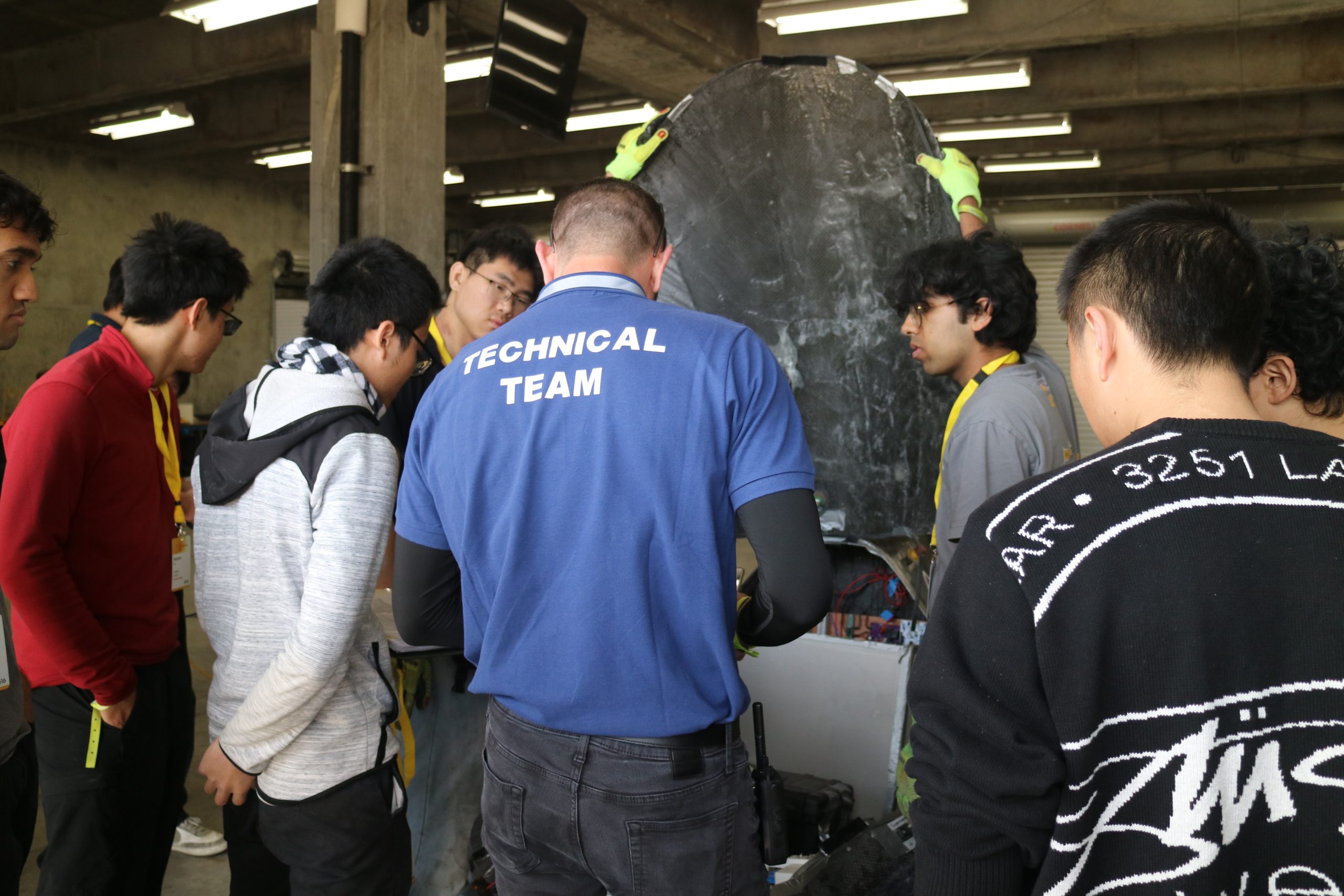
Building at that level requires skills learned outside the classroom. Mechanical engineering coursework covers the fundamentals — forces, deflection, weak points — but the leap from a computer-aided design, or CAD, model to a manufacturable part demands a separate skill set.
“A good design ultimately comes from understanding your fundamentals,” Fan said. “But there’s a whole separate set of skills you need to actually apply it to any product. Part of the reason we exist is to give people an opportunity to actually put their hands on something and apply their knowledge in a more practical sense.”
That hands-on approach also attracts non-engineering students. Kaitlyn Wu, the team’s media and design lead and a third-year student double majoring in statistics and data science and cognitive science, said her statistics coursework on research related to hydrogen connects naturally with her role on the team.
On track to an improved model
A key moment when the team realized its work was paying off came near the end of spring break, as the powertrain team mounted the motor and motor controller onto a bare-frame “skateboard” rig — the steering and electronics without the structural shell.
“This was the first time we had the entire system built into one,” Kim said. “We were really struggling up to this point with several mechanical issues, such as the wheel internals rubbing against the cables of the motor, but it was really great to see the car just running once we fully assembled everything.”
The cockpit includes many of the controls found in a road car — blinkers, headlights and wipers — along with displays for speed and current draw. Before the Shell Eco-marathon, the team walked the 2.5-mile track, mapping braking points, racing lines and corners that require extra caution.
Driving the finished car at competition is a skill of its own, and the team wants to add more driver training time next year.
“Since the car is so low and lightweight, you feel every steering input and bump in the road immediately, which makes it feel super responsive compared to a normal car,” said Xu, the team’s primary driver. “During a lap, the strategy is all about being smooth and consistent for efficiency rather than speed.”
Next year, Bruin SMV will begin the design cycle with a functioning car rather than starting from scratch. With most of the vehicle’s architecture validated and inspection requirements clearly mapped, the goal moves up a rung: qualify for a competitive run and post an official time on the track.