
UCLA Aerospace Engineering Alum Named to Forbes 30 Under 30 for Work Reducing Air Pollution
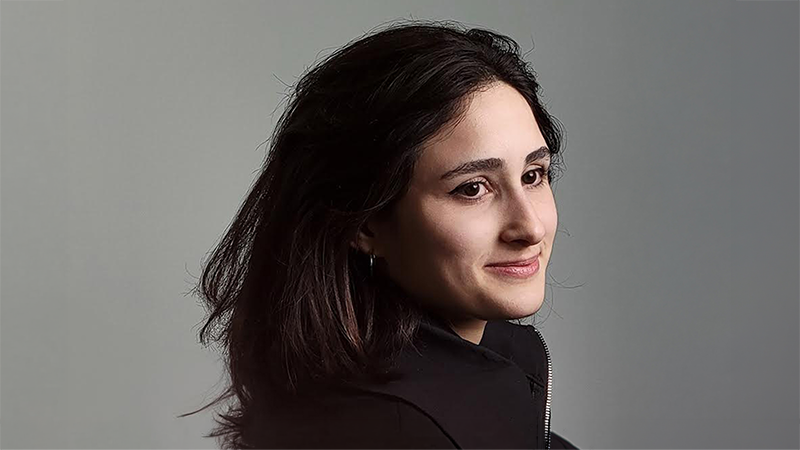
Courtesy of Selene Sari
UCLA Samueli Newsroom
Selene Sari ’18 wants to make clean air easier to capture — but instead of reinventing the air filter, she’s tackling contaminants themselves.
Sari is the founder of Vox Aeris, a Los Angeles hardware and research company developing energy-efficient technology to capture particulate matter, a major contributor to air pollution consisting of tiny solid and liquid particles suspended in the air that can be inhaled deep into the lungs and enter the bloodstream. She was named to the Forbes 2026 30 Under 30 list in Energy and Green Tech for her work in acoustic agglomeration, a technique that applies sound waves to a stream of dusty air, causing fine particles to collide and cluster. The resulting larger clumps are far easier for common, low-grade air filters to capture, improving filtration performance without modifying existing filters.
While acoustic agglomeration has existed in industrial and research settings, Sari said technical challenges have kept it from widespread commercialization. She is working to engineer the method into a compact form factor compatible with the filtration systems already in use.
“If an engineer can improve the life of even one person, that’s the greatest fulfillment of an engineer’s purpose,” Sari said. “To me, building a product or technology is one of the most concrete ways to make that real.”
What drove Sari to action was the death of Ella Kissi-Debrah, a 9-year-old in the U.K. who suffered a fatal asthma attack in 2013. Following a coroner’s inquest in 2020, she became the first person in the world to have air pollution listed as a cause of death on her death certificate. According to the World Health Organization, 99% of the global population breathes polluted air.
“Both of these facts seemed unacceptable to me in an era when we have the knowledge, awareness and filtration technology to do better,” Sari said. “It pointed to a major disconnect between the technology that exists today and where it’s actually being applied.”
From Turkey to America: A Journey to Engineering
Growing up in Ankara, Turkey, Sari is the daughter of an engineer mother and an entrepreneur father whose love of cars and tuning projects rubbed off early. Physics and geometry were her favorite subjects. But she was hooked after reading Joseph Katz’s “Race Car Aerodynamics” and learning about Malcolm Sayer, the aeronautical engineer behind the design of the legendary Jaguar E-Type, which Enzo Ferrari has reportedly called the most beautiful car ever made.
“If an engineer can improve the life of even one person, that’s the greatest fulfillment of an engineer’s purpose,” said Selene Sari. “To me, building a product or technology is one of the most concrete ways to make that real.”
After high school, Sari came to the U.S. in 2014 and enrolled in the UCLA Samueli School of Engineering as an aerospace engineering undergraduate student with a focus on aerodynamics and automotive applications. She joined Bruin Racing — a student-led organization that designs, manufactures, tests and competes single-seat vehicles — to work on aerodynamics, but the club did not have an aerodynamics program at the time, so she set out to build one while working on the manufacturing sub-team. Over the next three years, Sari taught herself computational fluid dynamics, completing an internship in automotive aerodynamics and recruiting teammates from aerospace and mechanical engineering classes.
The team’s first aero package was modest, but that didn’t faze her. The more important thing for Sari was fulfilling her goal of starting an aerodynamics tradition in Bruin Racing that could grow after she graduated. In her final year on the team, Sari came across research showing that an undertray, which is slightly simpler to produce than a set of wings, could provide up to half of the downforce on a race car. That became her focus and she launched Bruin Racing’s aero sub-team. Today, the team’s car includes a front wing, rear wing, underbody and bodywork as part of its aero package.
Inside the classroom, Sari’s favorite course was MAE 150B: Aerodynamics, which changed her approach to problem-solving.
“I noticed that learning by doing, and going back to the theory with a specific purpose in mind, was a much more effective way for me to learn,” she said. “That’s the approach I still carry today. Start by building a prototype, then iterate from there.”
After UCLA, Sari spent several years working as an aerodynamics engineer in the electric vehicle sector before earning a joint master’s degree in innovation design engineering at Imperial College London and the Royal College of Art in 2023.
She chose the program in part to follow in Sayer’s footsteps, tracking his cross-disciplinary path in design and engineering. She had also been considering whether air itself could become a design tool after a former manager commented that aerodynamicists sculpt with air.
Driven by her curiosity about applying engineering methods to address air pollution, Sari launched Vox Aeris, Latin for “sound of air,” as a solo project during the final year of her master’s program in the U.K.
Master’s Coursework Turned Solo Startup: Vox Aeris
Since the company’s founding, Sari has deliberately delayed outside investment and remained its sole founder. Now back in Los Angeles, she continues to manage the company independently. She said this has allowed her to experiment and pivot on her own terms while learning to manage every aspect of the business. Building solo presents its own challenges, but it also made Sari appreciate the arduous process even more when she secured the company’s first patent.
A mentor once told Sari that the darkest moments in development are opportunities for intellectual property and new findings, and that framing has stayed with her. Failed prototypes, she said, become the essential part of what comes next.
Sari is also motivated by the impact she aims to create. Access to clean air, she said, is a fundamental right. While being recognized by Forbes is validating, it’s the engineering work to solve this challenge that keeps her going.