Facts and Figures
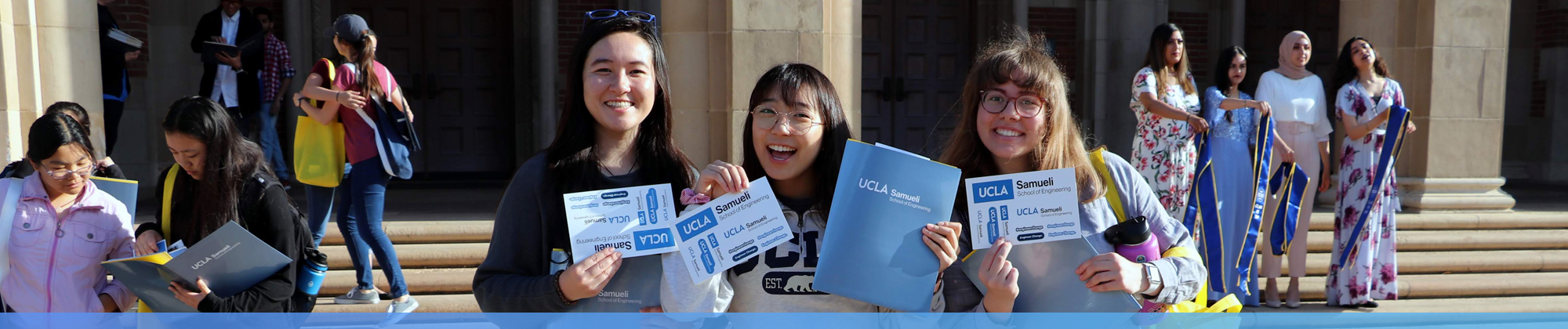
The UCLA name in itself conjures up images of sun, palm trees and a bustling community of social and tech-driven activities. Of course we have those, but UCLA Samueli also more than holds its own in the traditional school ranking systems. In fact, we are consistently ranked in the top 10 among U.S. public engineering schools and are one of the top engineering programs in the world. In addition, the school’s master’s online program has been ranked No. 1 by U.S. News & World Report for three years running. UCLA Samueli has earned its place at the forefront of interdisciplinary research and education through the efforts of our students, faculty and alumni.
Enrollment 2025–2026
Undergraduates: 4,142
Graduate students: 2,501
Full-time faculty members: (headcount) 213
Degrees granted 2024–2025
Bachelor’s of Science: 1,098
Master’s of Science: 845
Ph.D.: 227
Seven Academic Departments and the Affiliated Department of Computational Medicine:
Bioengineering; Chemical and Biomolecular Engineering; Civil and Environmental Engineering; Computer Science; Electrical and Computer Engineering; Materials Science and Engineering; Mechanical and Aerospace Engineering
UCLA Samueli is a tightly knit community of 213 full-time faculty members, more than 6,500 undergraduate and graduate students, and nearly 50,000 active alumni. Known as the birthplace of the internet, UCLA Samueli is also where countless other fields took some of their first steps – from artificial intelligence to reverse osmosis, from mobile communications to human prosthetics. In 2021, UCLA became the first university to win an XPRIZE with a UCLA Samueli team awarded a $7.5 million grand prize in the NRG COSIA Carbon XPRIZE. UCLA Samueli is consistently ranked in the Top 10 among U.S. public engineering schools.
* Enrollment and and degree numbers are from the UC Information Center. Faculty headcount number is from the UCLA Office of Academic Planning and Budget (APB).
News
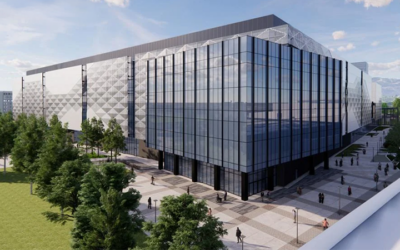
UCLA Samueli to Join Applied Materials’ EPIC Center to Accelerate Chip Innovation
The UCLA Samueli School of Engineering and Applied Materials Inc. announced today an agreement for the school to join as a research collaborator
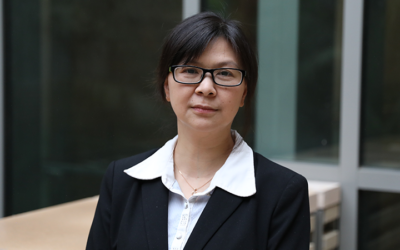
UCLA Engineering Professor Yu Huang Receives International Breakthrough Honor for Hydrogel Fuel Cell Innovation
Yu Huang, a professor of materials science and engineering and holder of the Traugott and Dorothea Frederking Endowed Chair at the UCLA Samueli School of Engineering
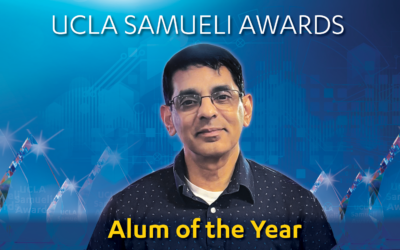
UCLA Samueli Announces 2026 Alum of the Year
Each year, the UCLA Samueli School of Engineering honors alumni, faculty, students and other engineering leaders for outstanding achievements in their fields.
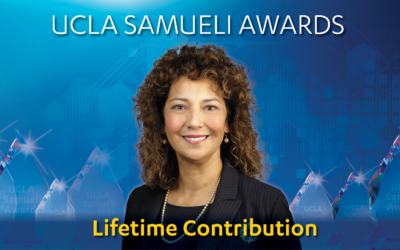
UCLA Samueli Announces 2026 Lifetime Contribution Award
Every year, the UCLA Samueli School of Engineering selects and recognizes outstanding achievements by a number of its alumni, faculty members and students who have excelled in various fields.
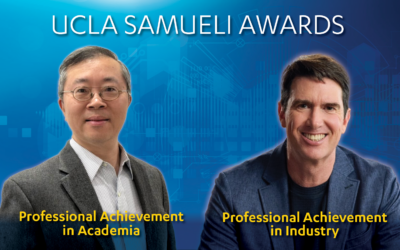
UCLA Samueli Announces 2026 Professional Achievement Awards
Each year, the UCLA Samueli School of Engineering honors alumni, faculty, students and other engineering leaders for outstanding achievements in their fields.
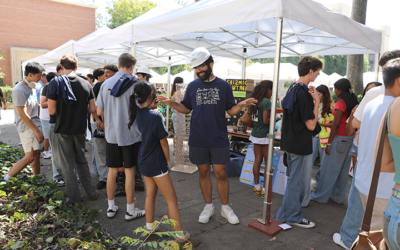
UCLA Samueli Welcomes the Next Generation of Bruin Engineers
The UCLA Henry Samueli School of Engineering and Applied Science kicked off the 2026-27 academic year with two days of welcome events this week at the Court of Sciences. Nearly 700 new master’s and doctoral students and more than 1,100 first-year and transfer students have enrolled in the school this fall.